The area model for multiplication is a fantastic tool for making sense of multi-digit multiplication. But too often, we turn this beautifully visual concept into just another rigid, step-by-step procedure for students to memorize without building true foundational understanding. When we restrict the area model to decomposing numbers by place value only, we miss out on its greatest superpower: flexibility. Approaching the area model with flexibility allows students to decompose numbers in ways that make sense to them, building a robust foundation for mental math and number sense. By teaching the area model as a flexible strategy rather than a strict procedure, we unlock deeper mathematical reasoning that carries students far beyond standard algorithms.
You May Have Seen the Area Model Like This
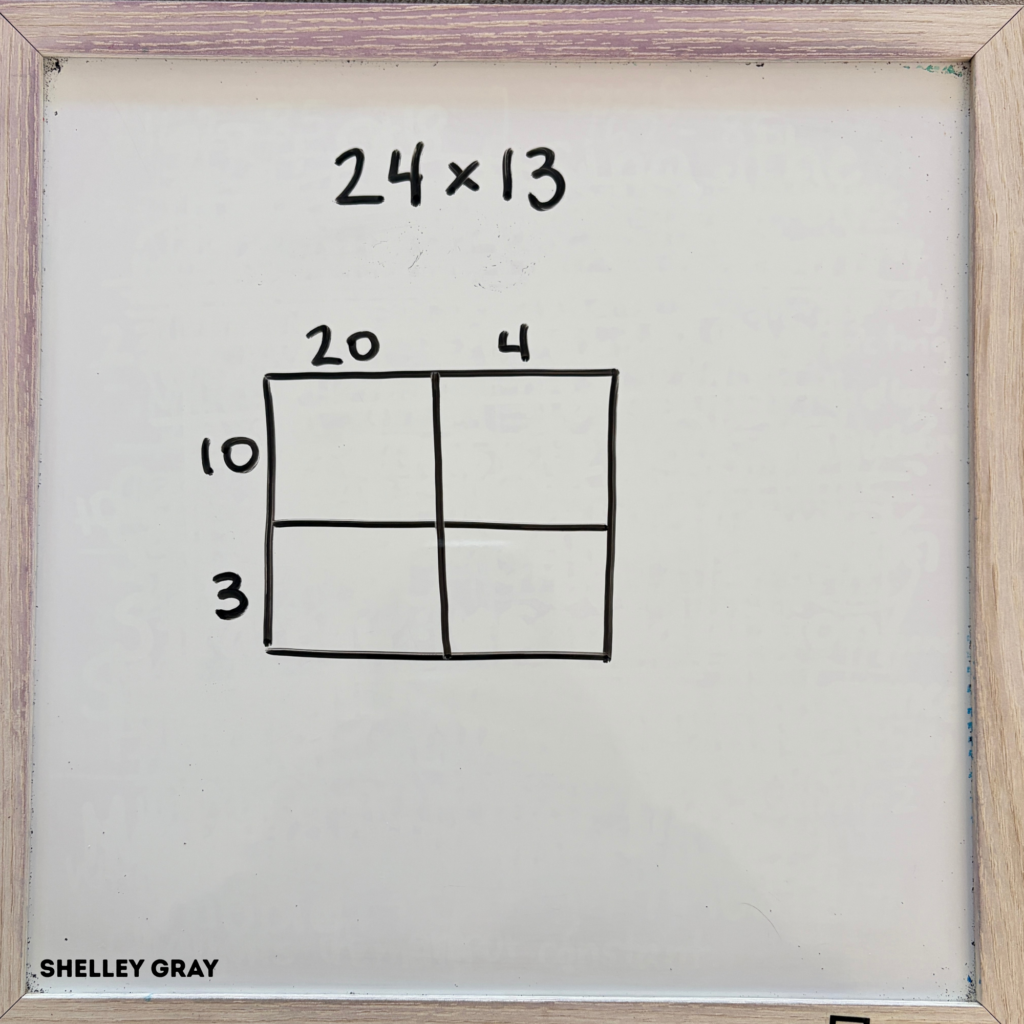
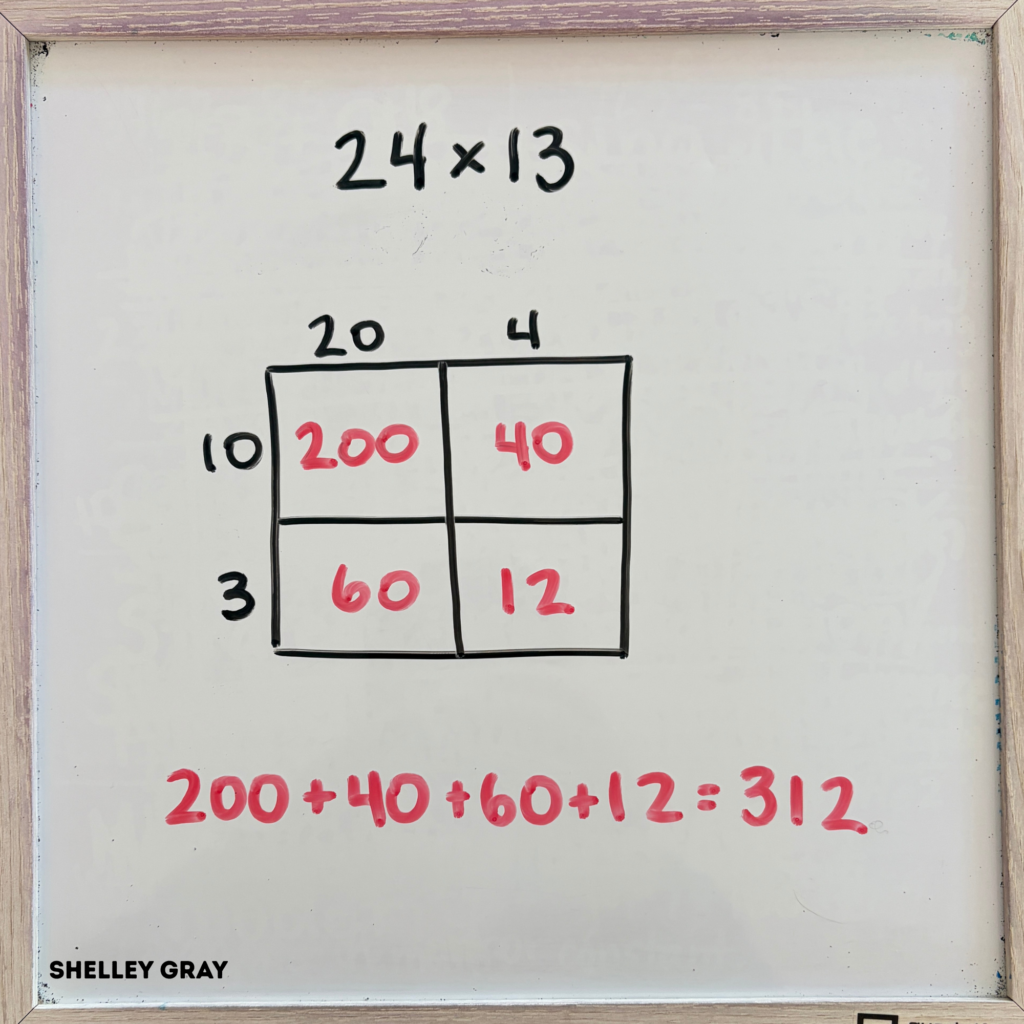
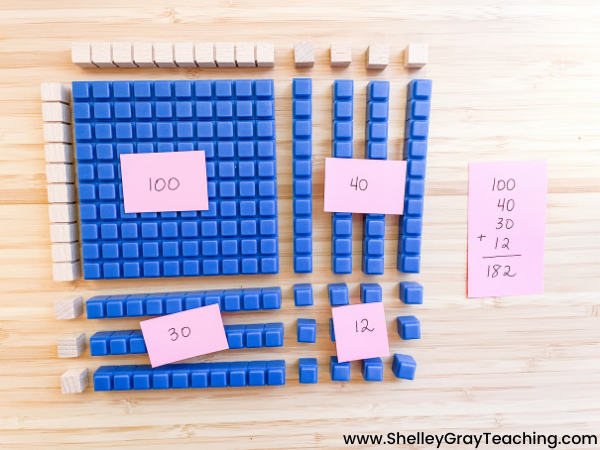
If you have seen the area model in action before, it may have looked something like this – with evenly sized parts and the two factors broken up by place value. In the example below, we broke up 24 into 20 and 4, and 13 into 10 and 3. When we multiply all the parts, and then add up those partial products, we get 312.
This works! But for students just beginning to use the area model, we want to ensure that we are building number sense along the way.
Understanding Proportionality and Magnitude of Numbers
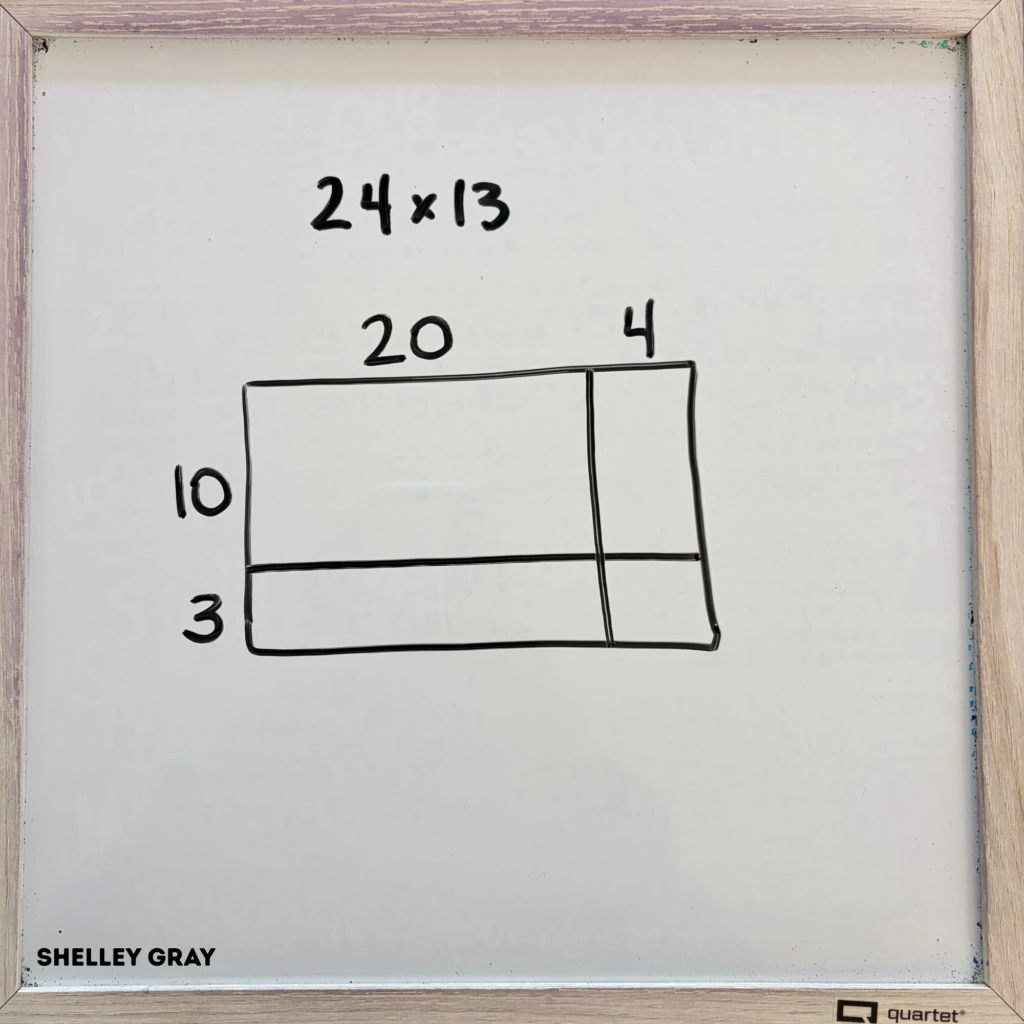
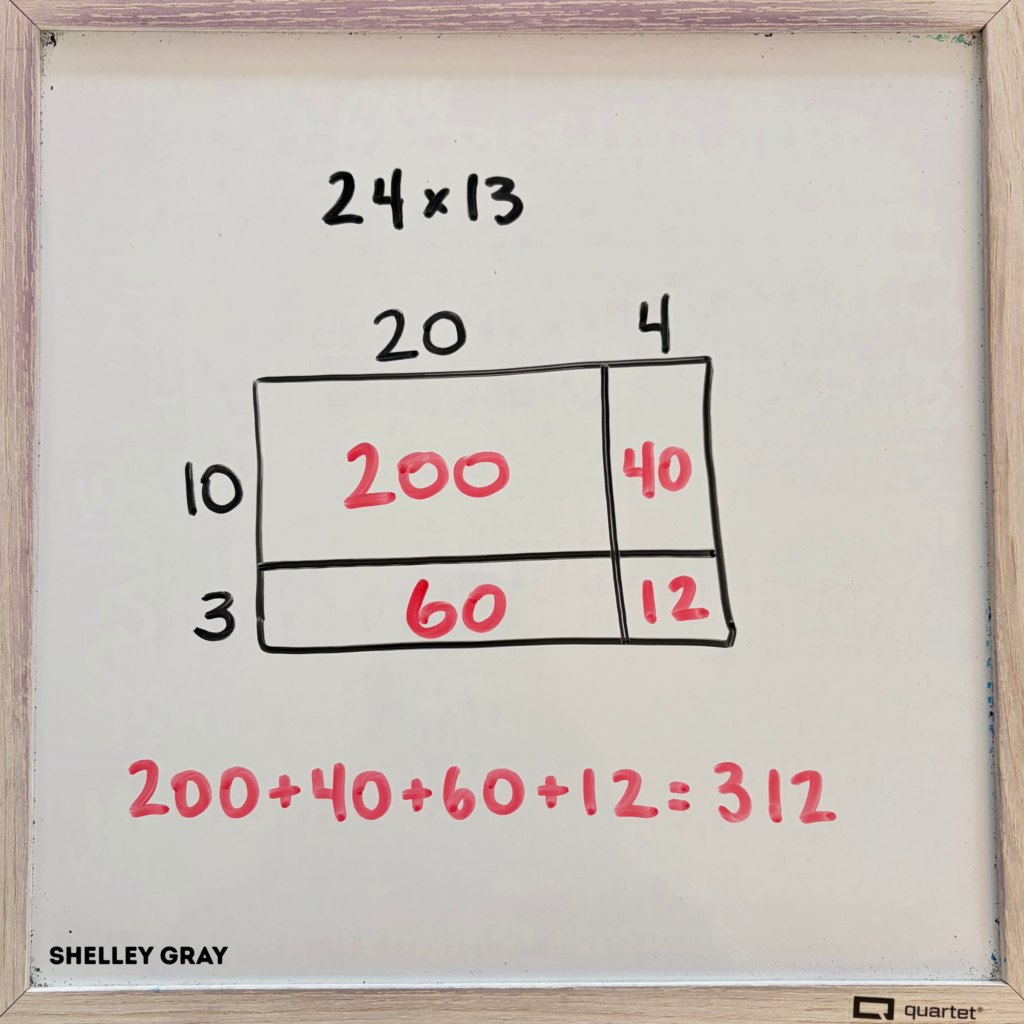
By bringing proportionality into our drawings, we can make the actual size and magnitude of numbers visible, taking the area model from a type of “graphic organizer” to a true mathematical model.
We want students to understand that 20 is bigger than 4, so it should take up more space on the model. Likewise, the spaces for 10 and 3 should not be equal.
Let’s take a look at what this looks like on the area model. As you can see from the models below, it is now apparent how the numbers relate to one another in size.
The Place Value Trap
The other issue with how the area model is often portrayed is related to place value. When the area model is treated as a rigid procedure, we often see only one “correct” way to decompose the numbers.
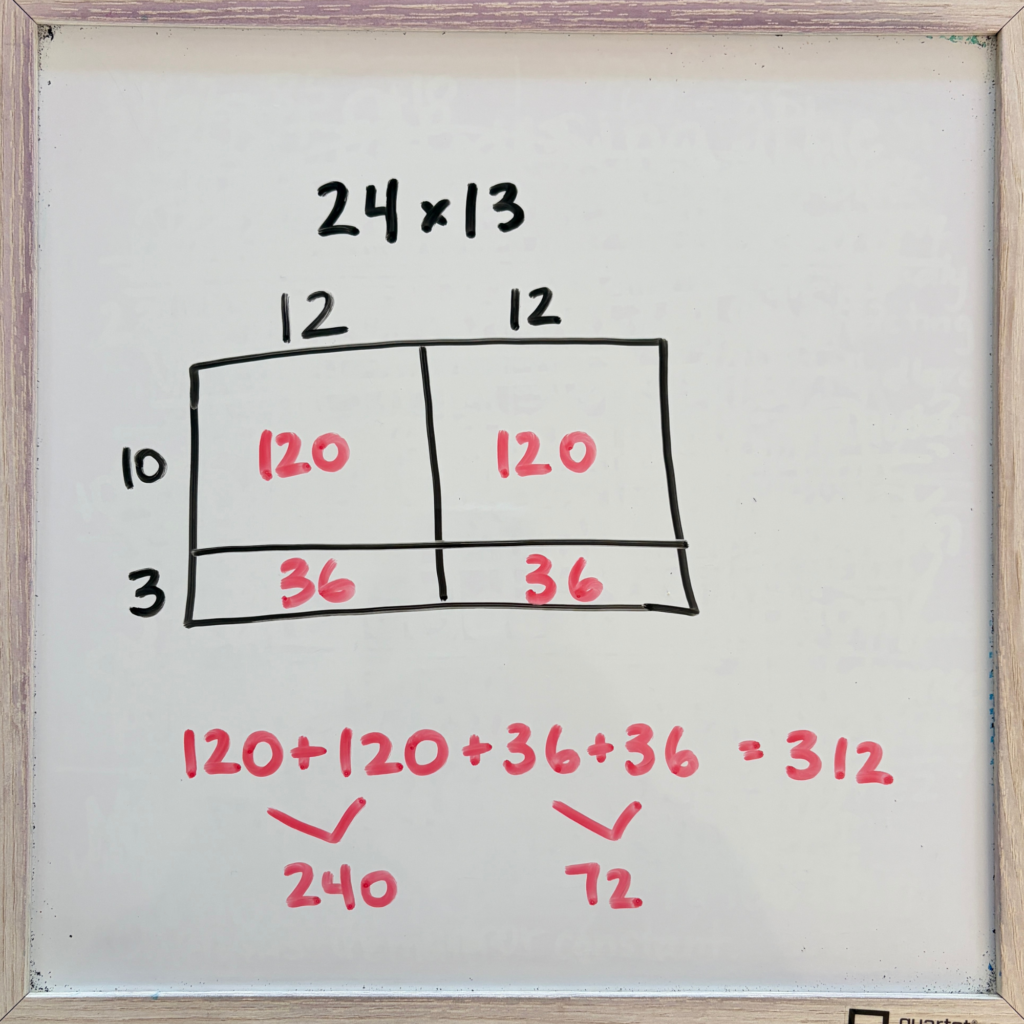
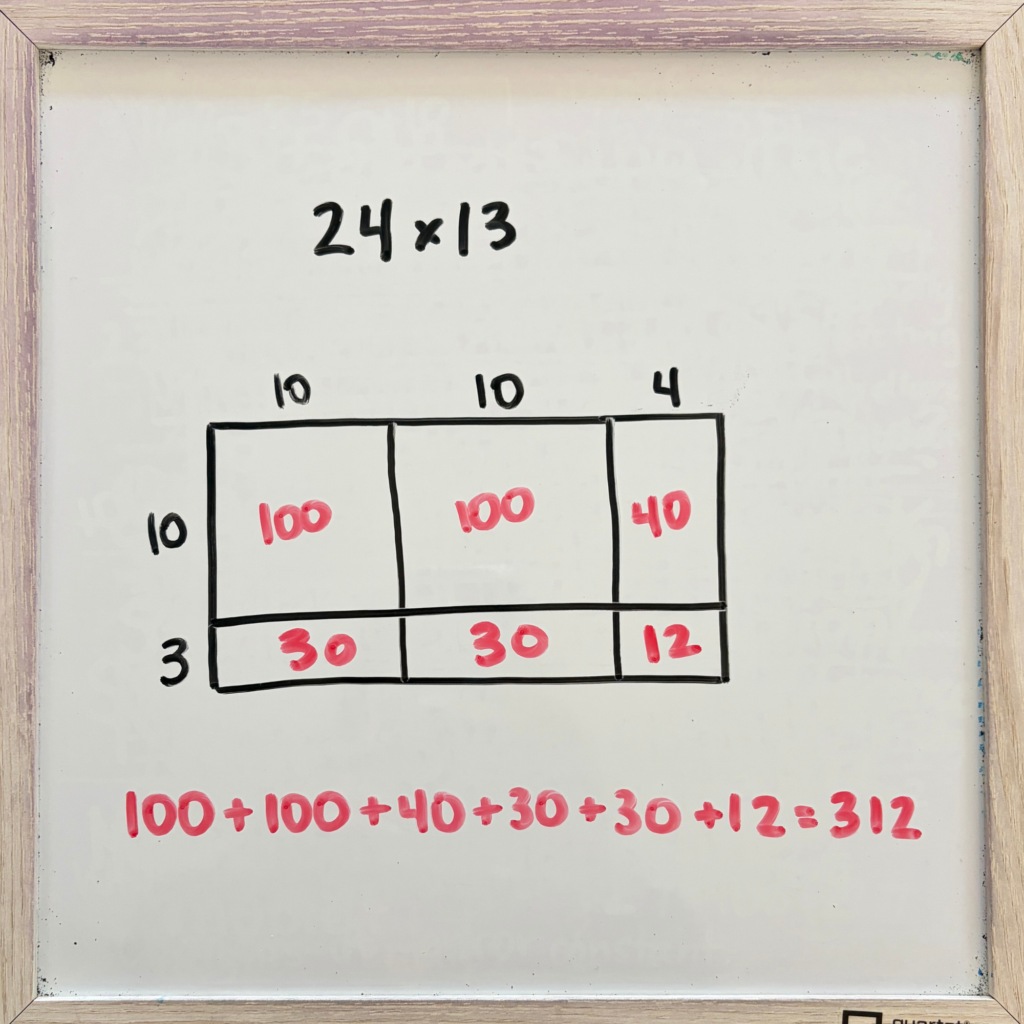
But what about the student who is comfortable multiplying by 12 and sees 24 as 12 + 12? Or what about the student who isn’t comfortable multiplying by 20 yet, but would rather see the 24 as 10 + 10 + 4?
This is where true flexibility comes in. For these students, their area models might look like the ones below.
One Problem, Four Ways: The Power of Flexibility
To see true flexibility in action, let’s look at a new problem: 16 x 25.
If we stick to the highly procedural place-value method, a student has to decompose 16 into 10 + 6, and 25 into 20 + 5.
This absolutely works, and will be the best option for many students. But when we encourage students to look at this problem in a way that makes sense to their brains, look at the variety of efficient ways students can flexibly manipulate these numbers.
The “Quarter” Thinker
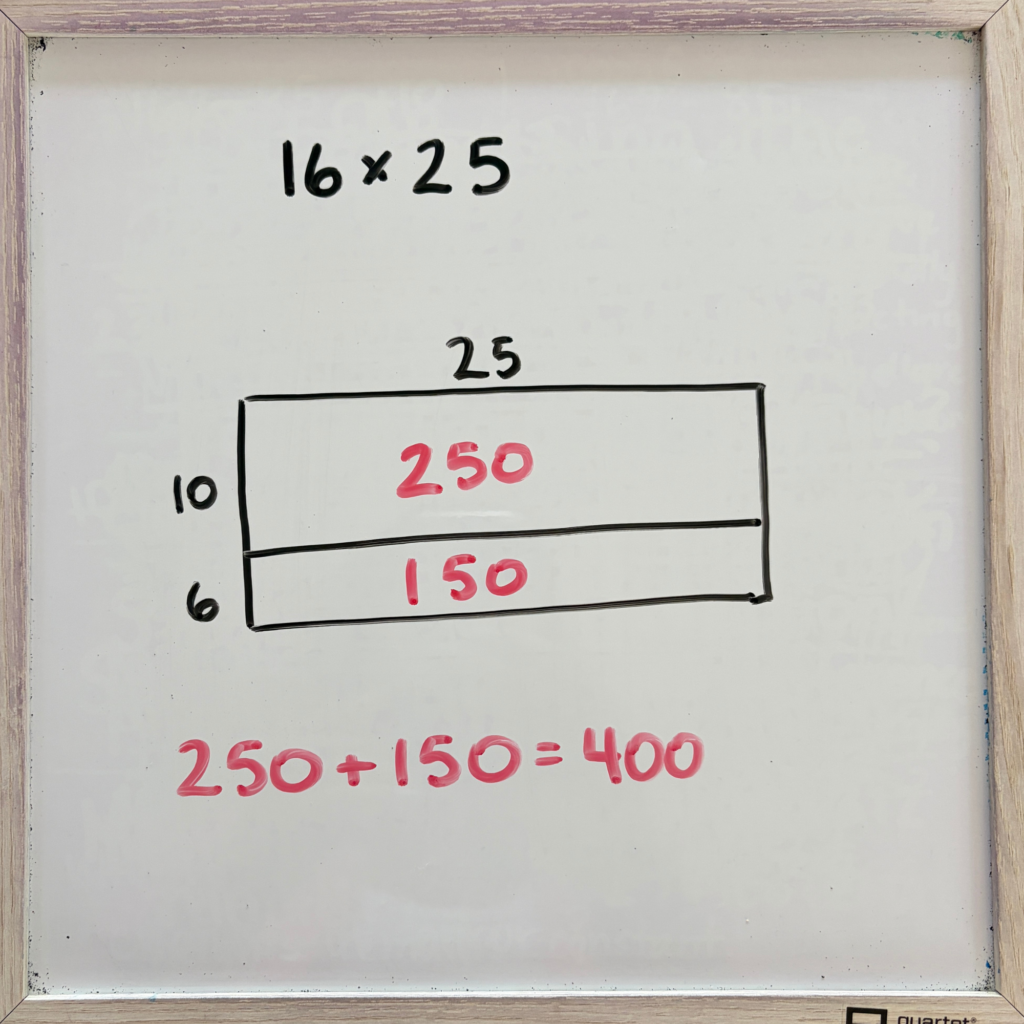
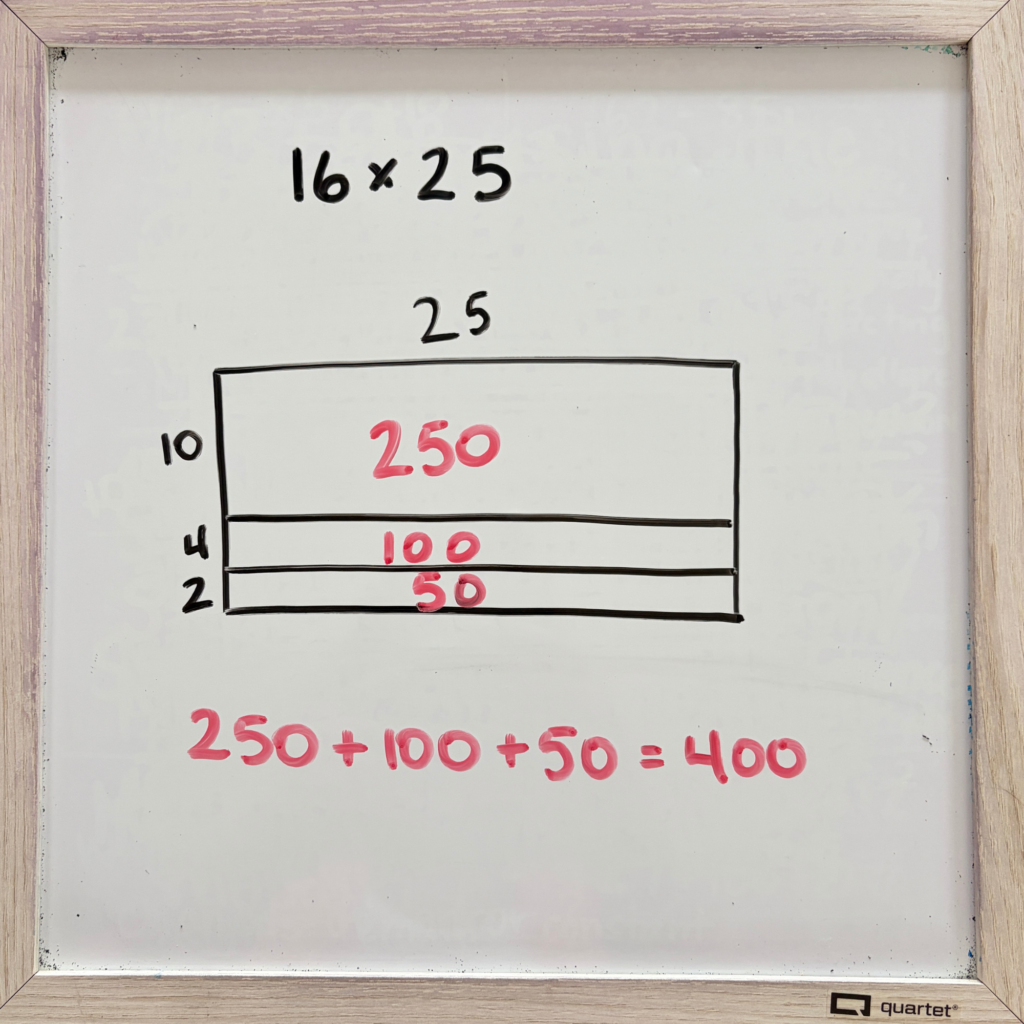
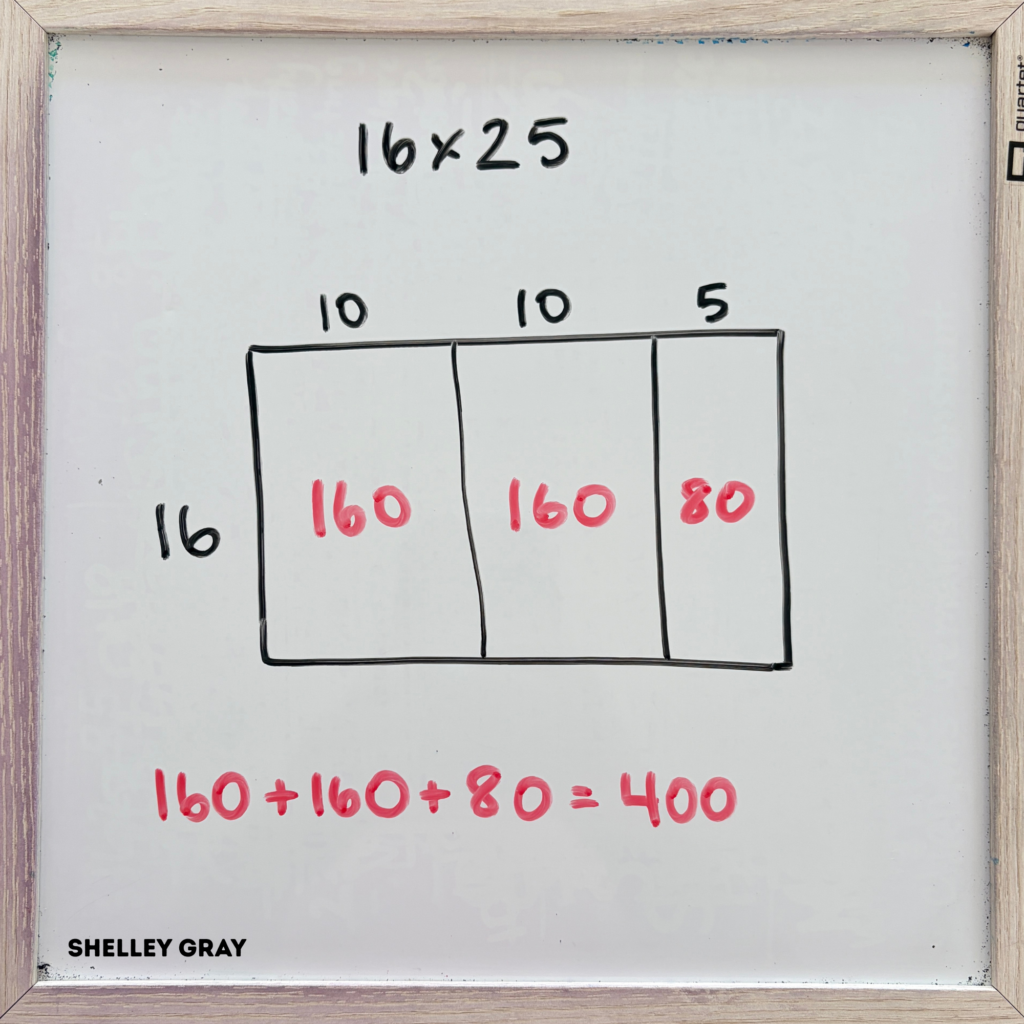
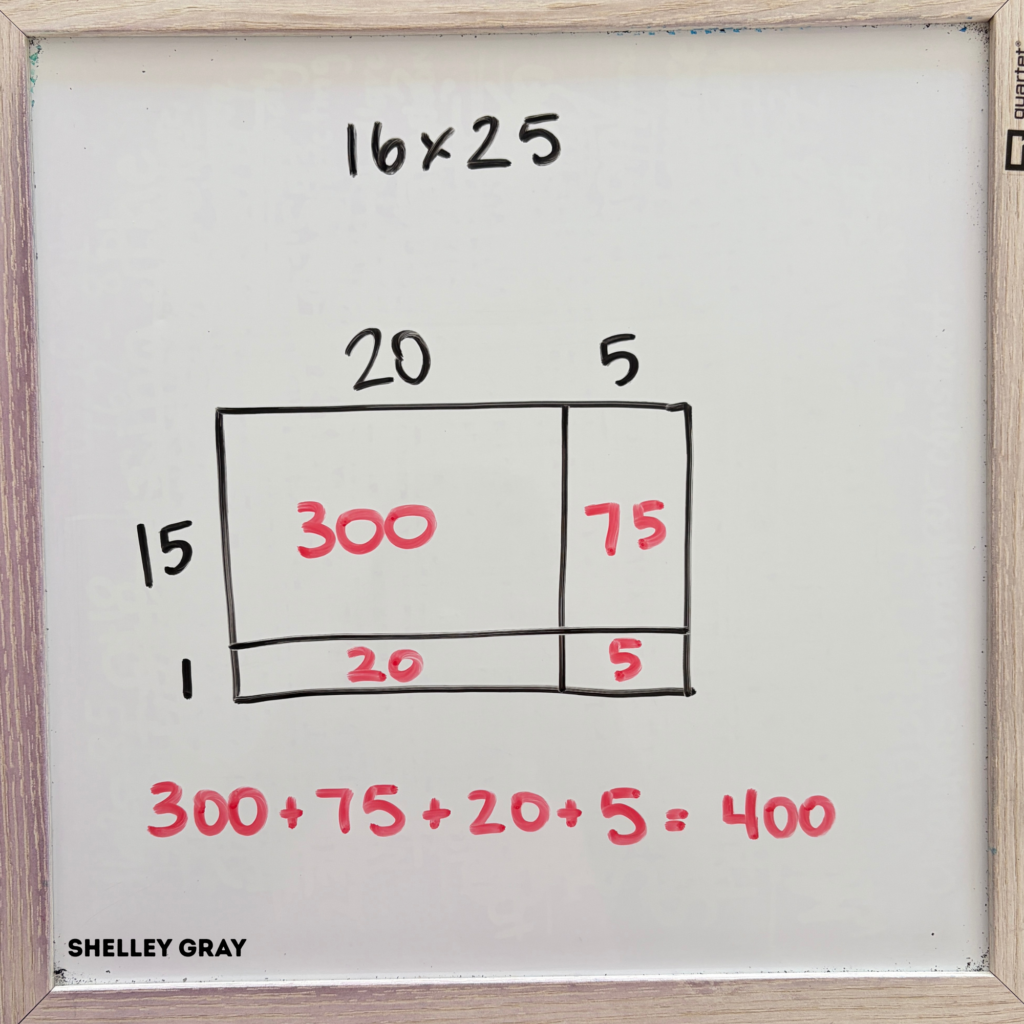
Working with 25s is intuitive for some kids. If a student can easily work with 25s, there is no reason to decompose that number – we can leave it whole and only decompose the 16 instead. There are different ways that students might do this.
One student might decompose the 16 by place value – into 10 and 6 – and then multiply each of those by 25.
Another might strategically decompose the 16 into 10, 4, and 2 which makes for easy multiplying by 25.
The “Equal Groups” Thinker
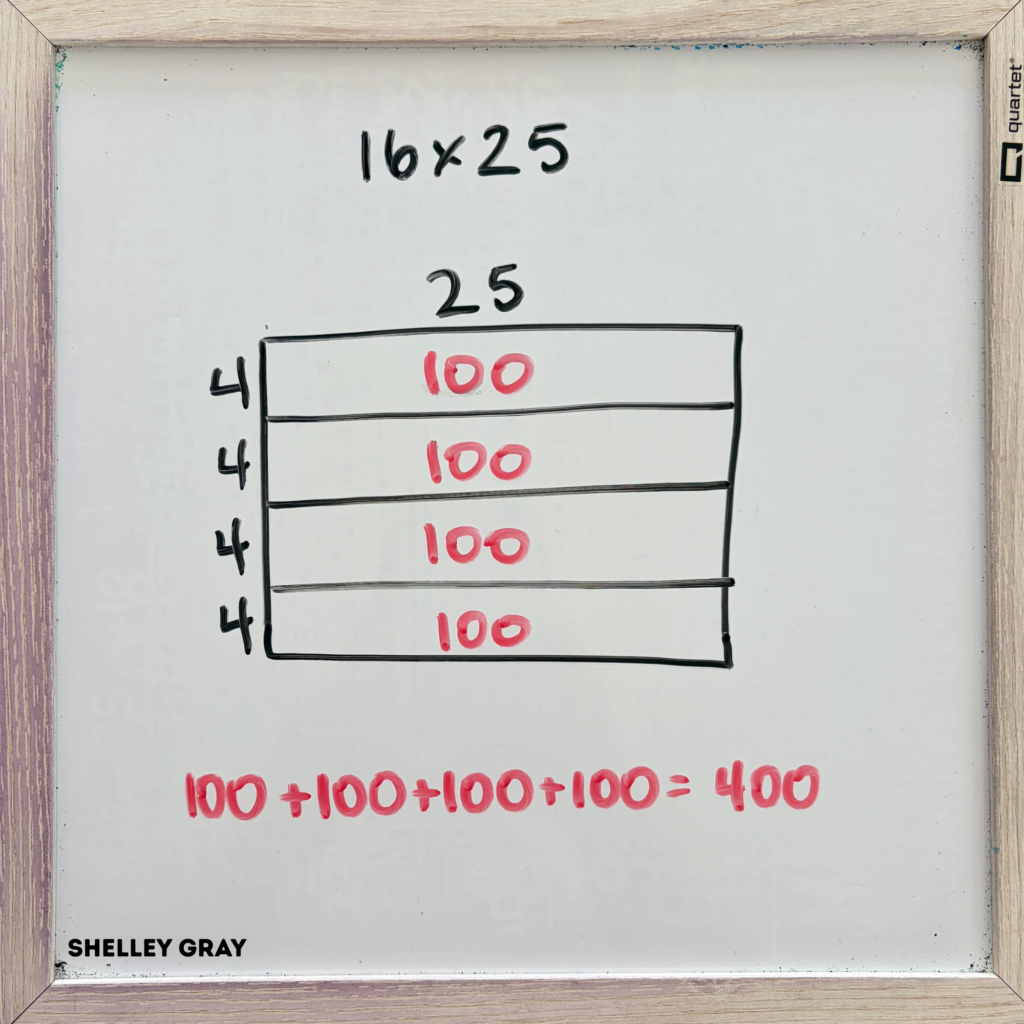
Another student might see 16 as four 4s, and, knowing that four 25s is easy to calculate, draw their model like the one below.
The “Compensation” Thinker
When we use the compensation strategy, we use nearby, friendly numbers and then adjust later.
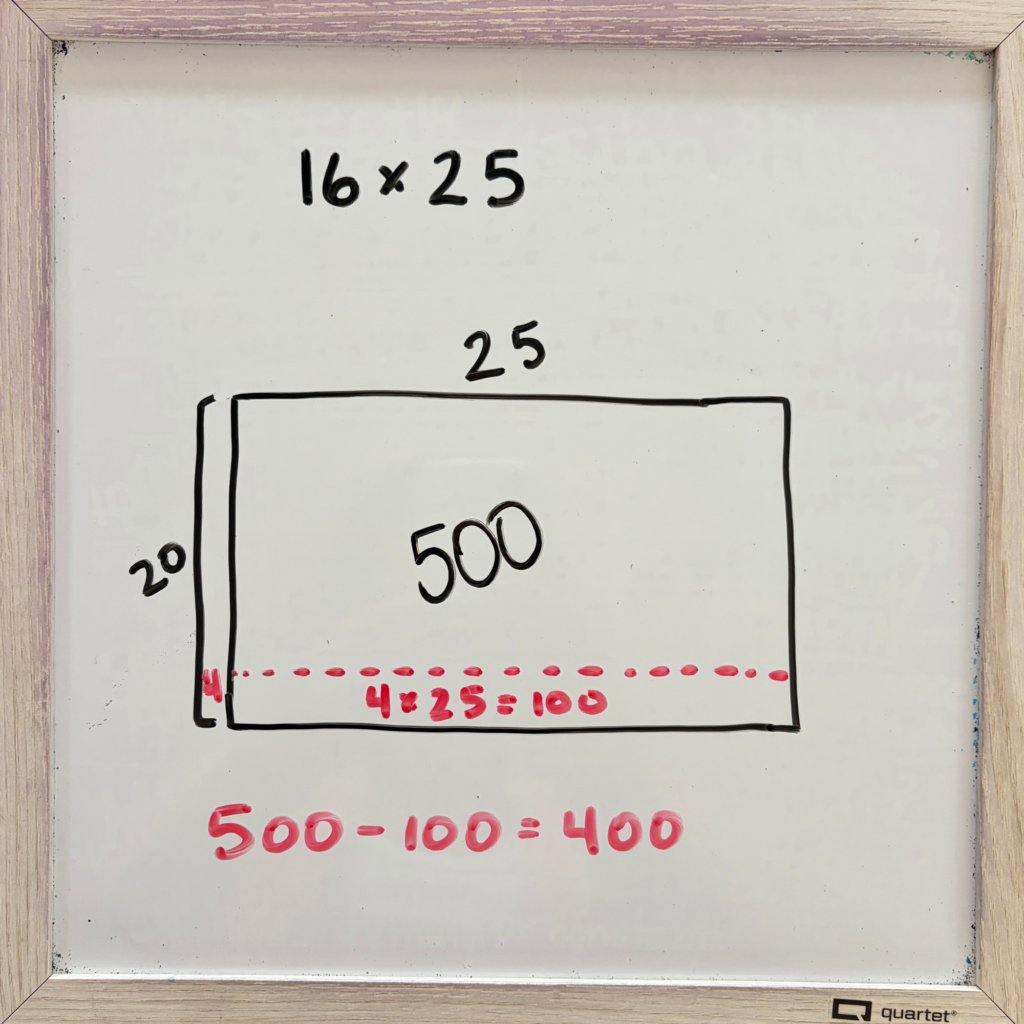
A student might see 16 x 25 and think about how much easier it would be to multiply 20 x 25 instead, then take away four 25s later. That student’s area model might look something like this.
Or of course, there are a multitude of ways to do this while decomposing the 25 as well. The area model allows students to see the math in a way that works for them and utilizes the facts they are comfortable with.
The Takeaway for Teachers
Every one of these students arrived at 400. None of them got stuck trying to line up numbers for the traditional algorithm or struggling with facts they don’t know. They looked at the numbers first, chose a path that matched their mental strengths, and used the area model to show their thinking.
How to Encourage Area Model Flexibility in Your Classroom
So how do you put this all into action in your classroom? The first step is to ensure that you are focusing more on the thinking than on the answer. When it comes to flexibility, we want to encourage different ways, not necessarily the fastest way to get to the right answer.
**Efficiency and effectiveness are important and will come later, but for now, we are encouraging flexible thinking.**
Here’s a practical classroom idea, assuming that your students already understand how the area model works:
Begin by writing an expression on the board.
On mini whiteboards, have students solve it using the area model in at least two different ways.
Have a class discussion and fill the whiteboard at the front of the room with all the ways that students came up with.
Have a class vote on which one they think worked the best. Why did it work the best?
Looking for more information on teaching the area model for multiplication? Find it here.