If you’ve spent any length of time looking at elementary math curriculum and perusing ideas on Instagram or Pinterest, this statement might sound shocking. We see number lines referred to as strategies all the time, but a number line isn’t a strategy at all – it is a model. This may seem like a minor vocabulary difference, but in reality it matters more than you think. When we confuse strategies with models, we accidentally limit our students’ thinking. Here’s why this distinction matters, and how truly understanding the difference between strategies and models will shift your math instruction.
Math Strategies vs Math Models - What's the Difference?
Strategies and models work together beautifully, and we should be using both as much as possible, but they are not the same thing! Let’s look at the unique roles that each one has during a math task.
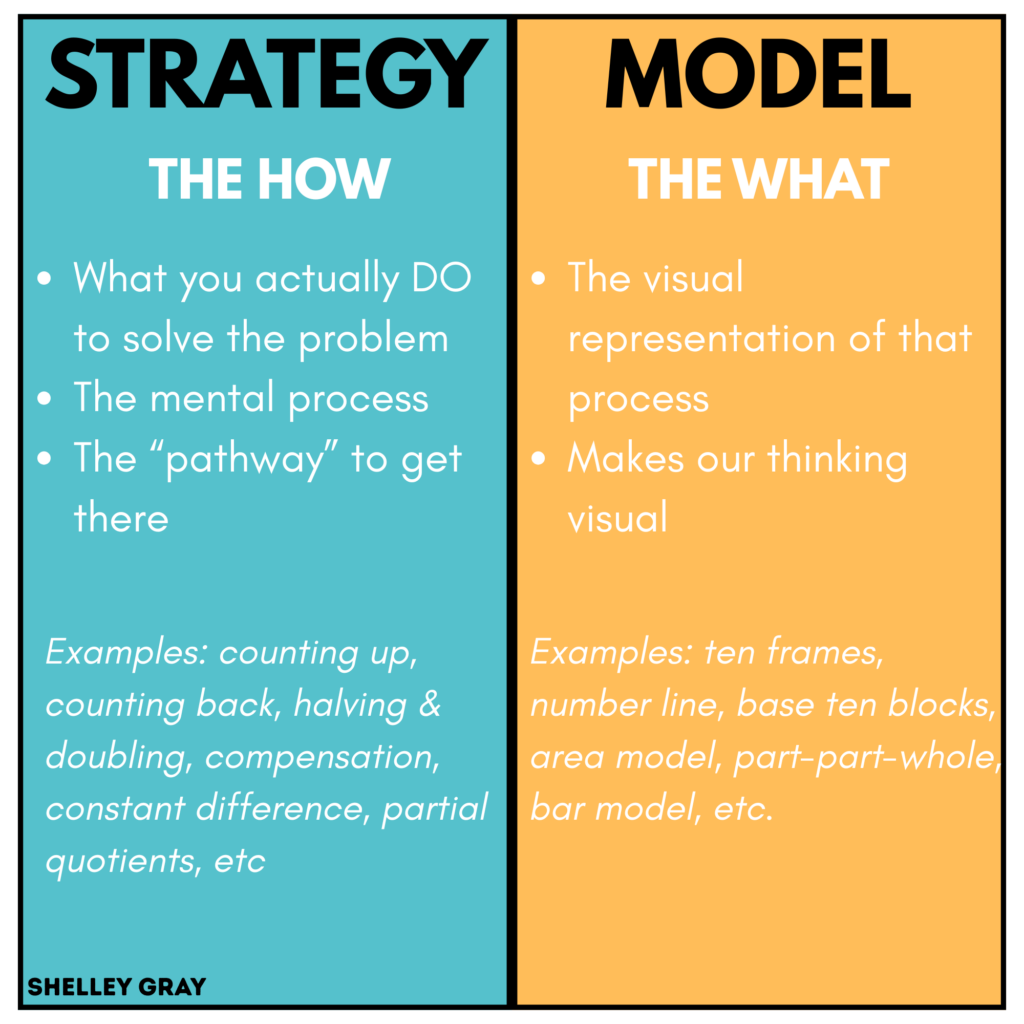
A Math Strategy is the HOW. It is what you actually do to solve the problem. It’s the mental action or numerical manipulation that we use to actually find the answer. We can think of it like the pathway to get to the solution.
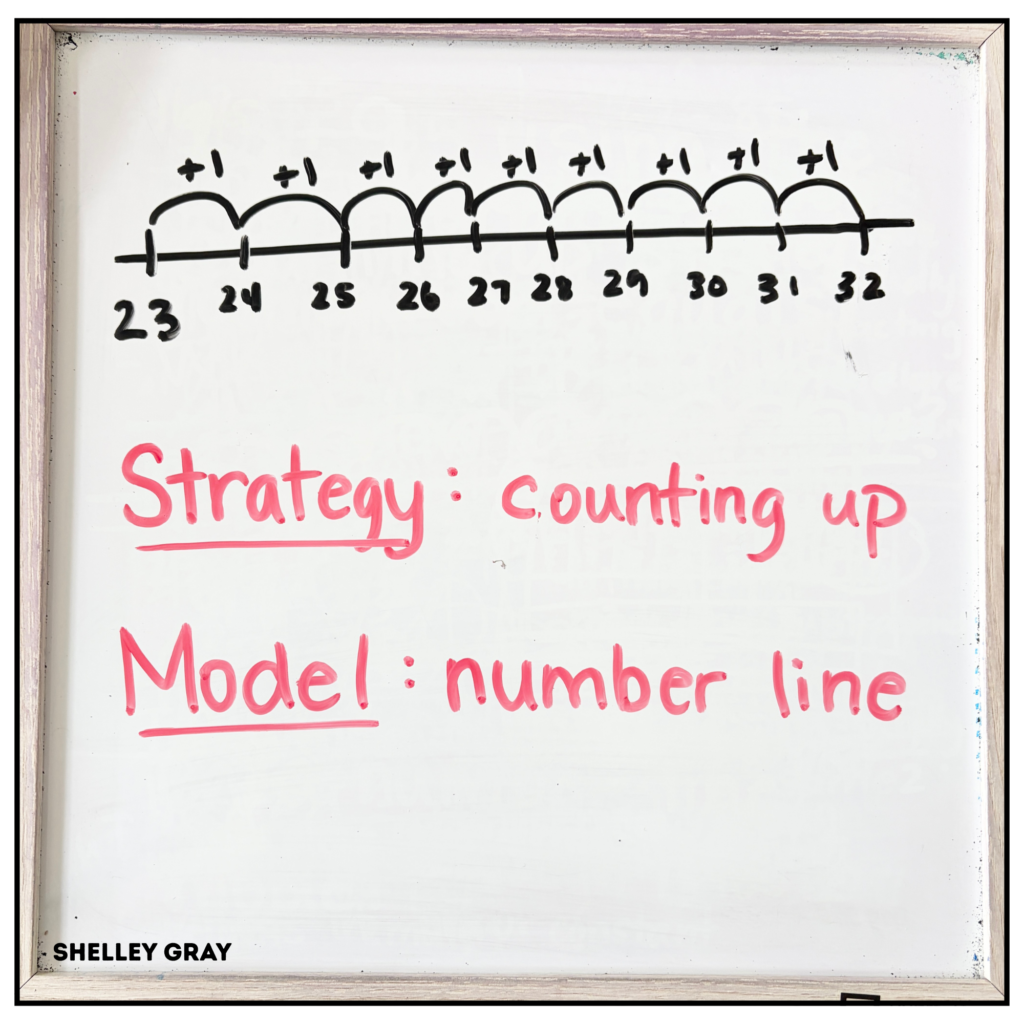
For example, I could count up to solve 23 + 9. Counting up is the strategy – it’s what my brain does in order to solve this problem. In my head, this sounds like, “23…24, 25, 26, 27, 28, 29, 30, 31, 32.” Sidenote: Counting up is a fairly ineffective strategy for this problem – but that’s a story for another day.
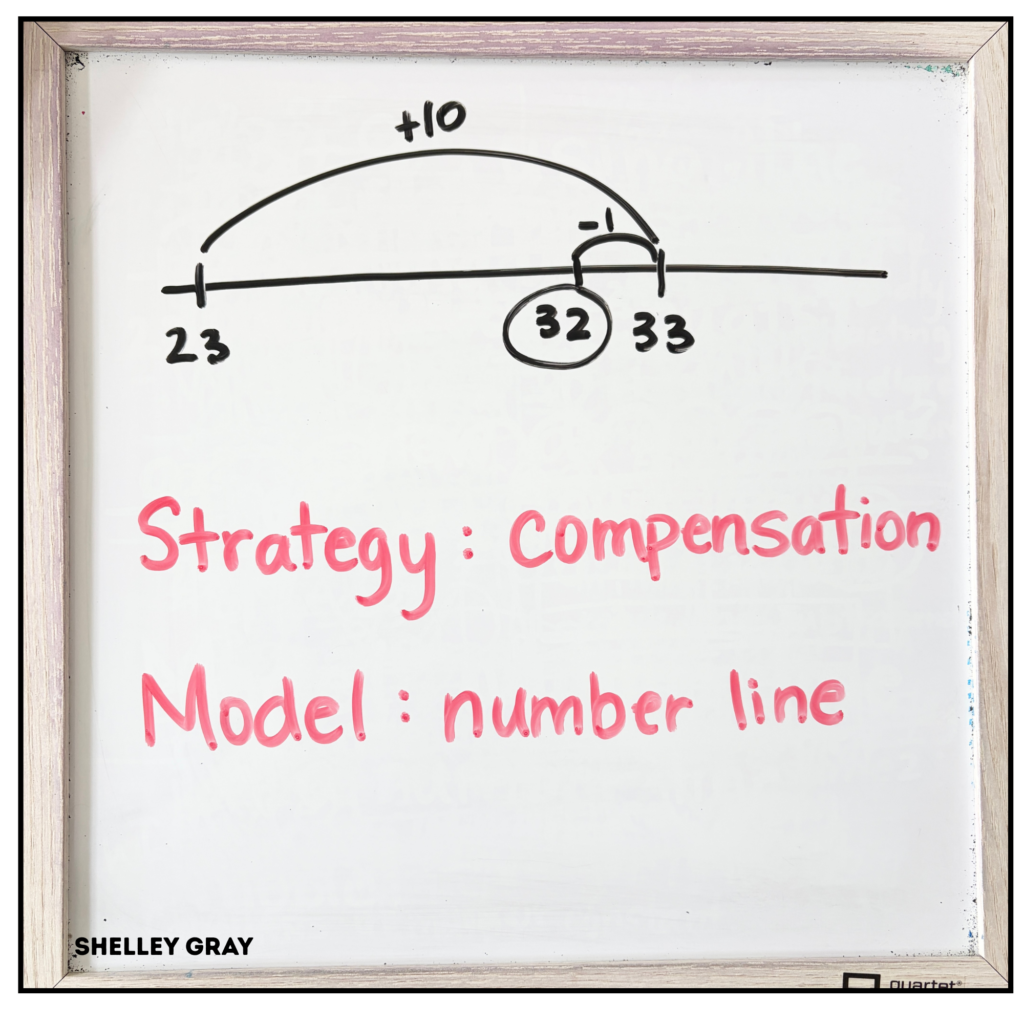
I could use compensation to solve this very same problem. Compensation is another strategy. It’s the mental process I’m using. In my head, this might sound like, “23 and 10 is 33, so 23 and 9 must be one less – 32!”
A Math Model is the WHAT. It’s the visual tool or representation that makes our thinking visible. It’s how we can show our thinking to others. Models that I love include part-part-wholes, ten frames, base ten blocks, area models, arrays, and – you guessed it – number lines!
Let’s model our same thinking from above on a number line.
If I solved 23 + 9 using the counting up strategy, I could model it on a number line like this:
But I could also use a number line to model the compensation strategy for this same problem! In this scenario, my number line might look something like this – add 10, then jump back 1.
One model (the number line) can show two different strategies (counting up and compensation).
How Might We Show Subtraction on a Number Line Model?
Let’s take a look at some subtraction examples. For this section, I’ll use three different problems with three different strategies, but only one model (the number line).
Counting Back on a Number Line
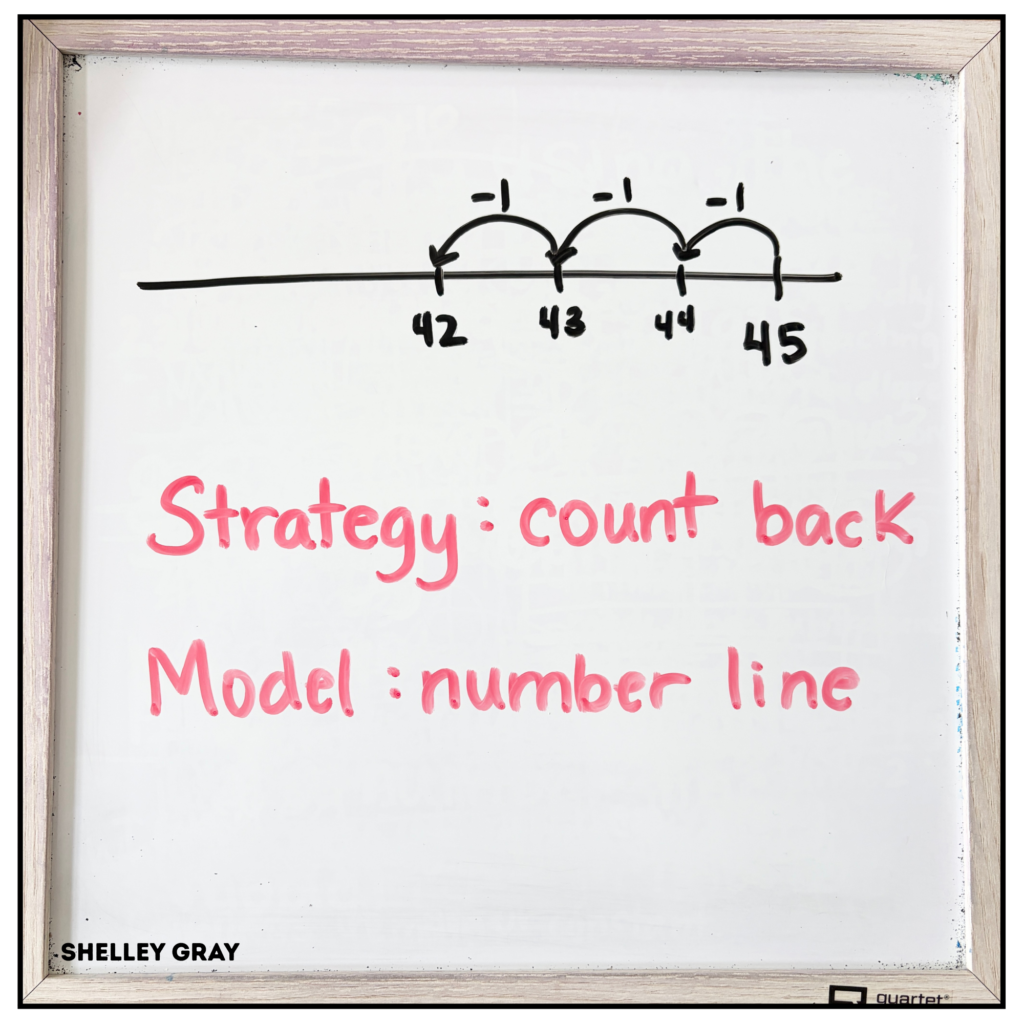
Ideally when we use counting back as a strategy, we want to limit it to counting back by 1, 2, 3, or 4 (otherwise it’s too easy to get mixed up).
We could count back to solve 45 – 3 by thinking, “45…44, 43, 42.” Our thinking can be modeled on a number line like this:
Constant Difference on a Number Line
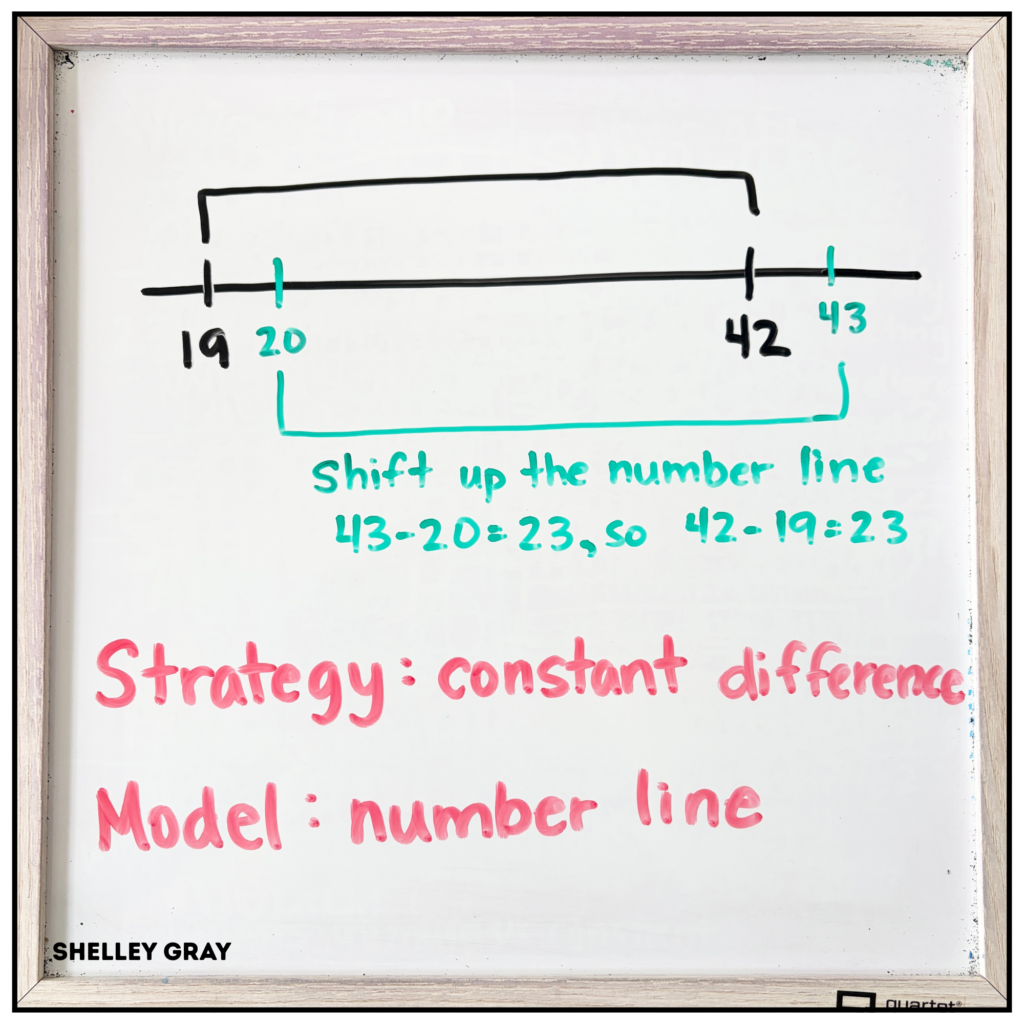
How about constant difference for subtraction? How might we model this thinking on a number line? We can solve 42 – 19 by thinking about the difference between 19 and 42. I know that if I add one to both my minuend and subtrahend, my difference will stay the same. I can think of this like a shift up the number line.
So rather than thinking about 42 – 19, I’ll think about 43 – 20 (that’s easier to solve in my head!). This can be shown on a number line model like this:
Adding Up/Counting Up/Using Addition on a Number Line
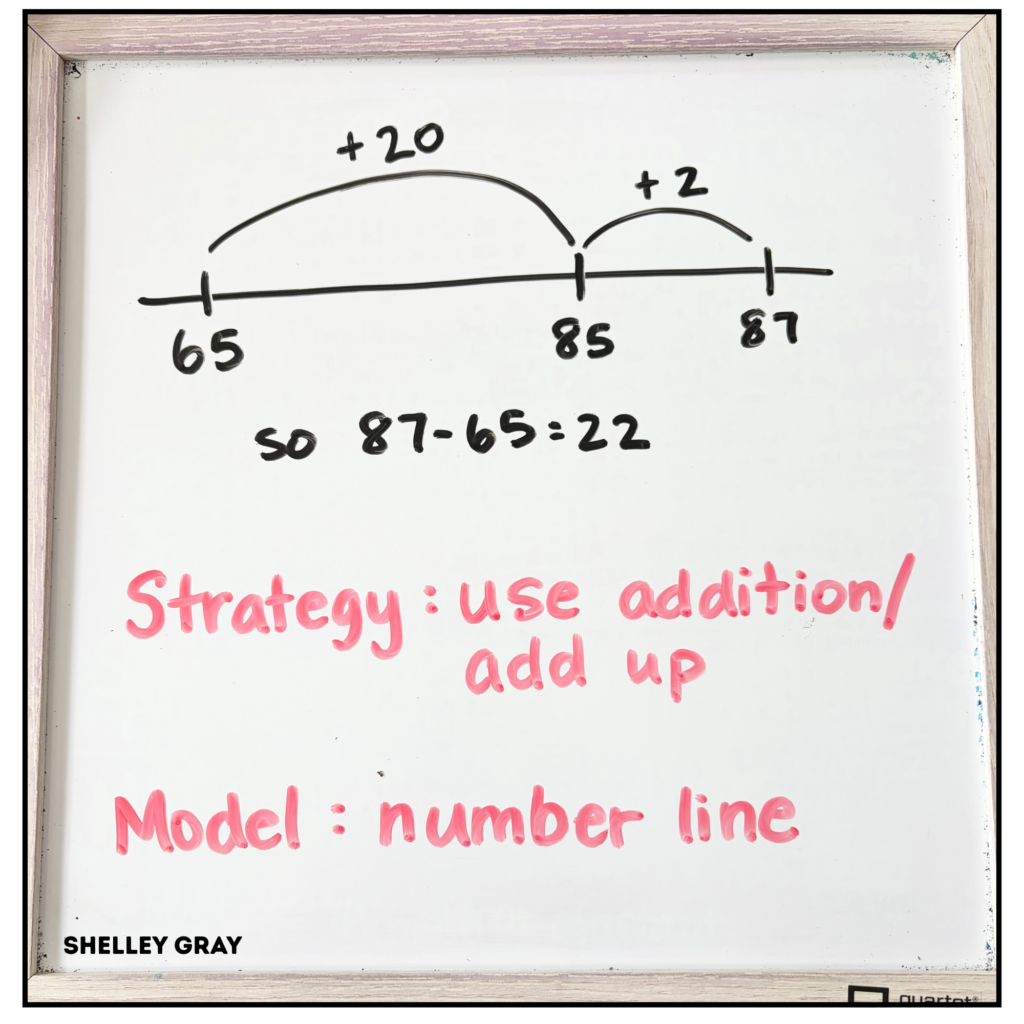
Counting up is a super-effective strategy when the minuend and subtrahend are (somewhat) close together. I could solve 87 – 65 by thinking in my head about how much I’d have to add to 65 to get to 87. In my head, that might sound like, “65…+20 gets me to 85, then +2 gets me to 87 – so 22!” This thinking can be shown on a number line model like this:
How to Use Strategies and Models to Support One Another
Now that we understand the difference between strategies and models, I want to take a second to emphasize how important it is to use them together.
When we can model student thinking visually, we often make it easier to deeply understand that strategy.
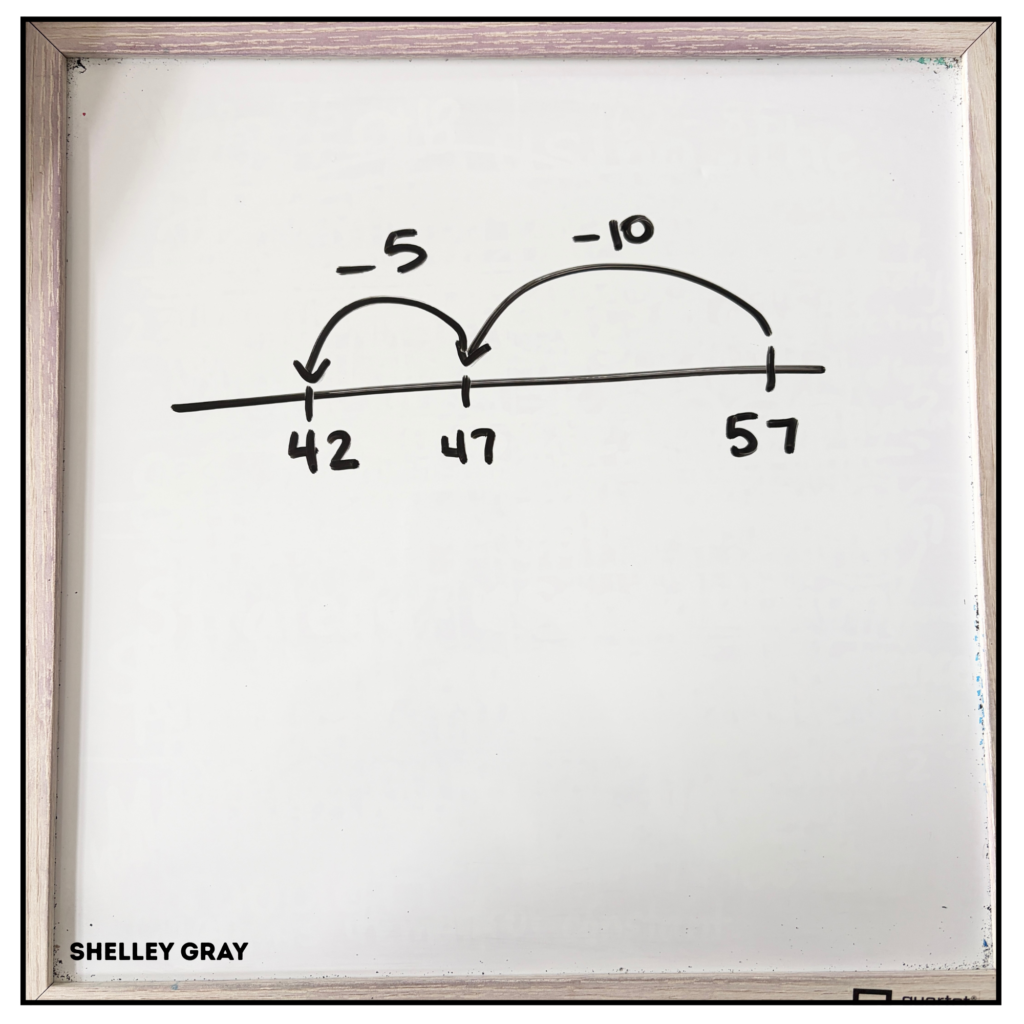
If you are doing a number talk for 57-15 and a student shares that he counted back 10 and then 5 more, show that thinking on a number line so other students can visualize it too.
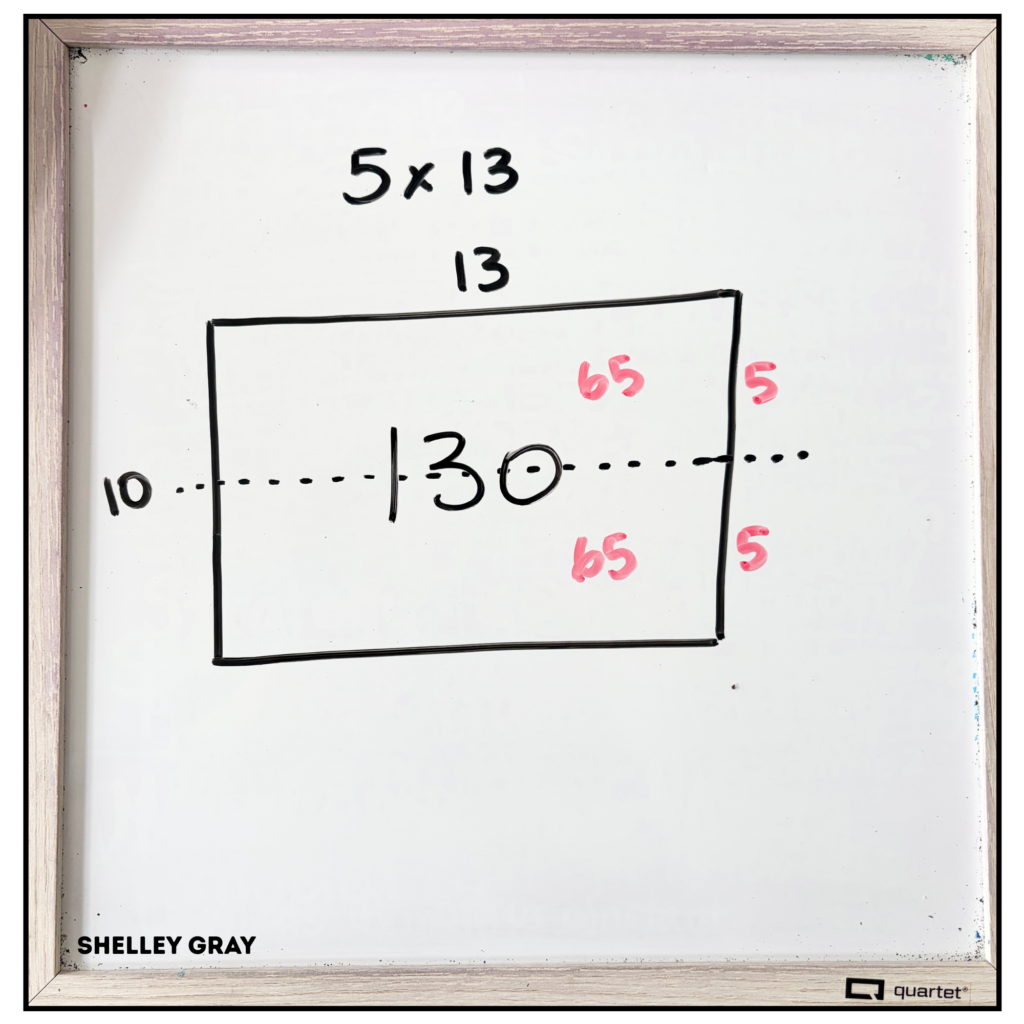
If you are doing a number talk for 5 x 13, and a student shares that she did 10 x 13 to make 130 and then halved it, you might use an area model to show her thinking visually.
The more ways we can make our thinking and our students’ strategies visible with models, the greater chance they have of developing a solid foundation of understanding.
Understanding the Difference
Unfortunately, misinformation (especially about number lines as a strategy) is common on social media. My goal for you is to be an educated consumer of information! The next time you see a post touting three different strategies for addition or subtraction and a number line is one of them, look closely. There’s a good chance that all three examples are actually showing the exact same strategy on different models.
Making this mistake means that our students don’t think as deeply as they could.
Personally, I want students to be describing their mental process, not just stating “number line” as a way that they figured something out. I want them to verbalize that process. For example, “I know that adding 10 is easier than adding 9, so I started with 23 + 10 to make 33, then took one away because I was only supposed to add 9 and not 10. I could use a number line to show my thinking.”
Encouraging students to go deeper with their explanations, beyond just the models that they used, opens up a whole new world of mathematical reasoning in your classroom.