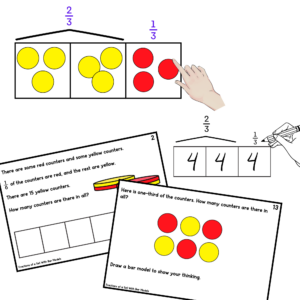
Cuisenaire rods (sometimes called number rods) are a fantastic tool for getting students to reason about numbers, but one of my absolute favorite ways to use them is for building fraction understanding. Because the value of each number rod can change based on your defined “whole,” these manipulatives force students into deep mathematical thinking.
When you give your students the opportunity to explore with the rods in a hands-on way (and then link that to part-part-wholes, bar models, and numerical representations), you are incorporating the very powerful CRA (Concrete-Representational-Abstract) Model to build deep conceptual understanding of fractions.
Here are five of my favorite classroom ideas for effectively using Cuisenaire rods to foster this high-level mathematical reasoning.
State the Whole & Find the Value of the Other Rods
When a different rod becomes the whole, the values of all the other rods change as well. For example, if red equals one whole, then white equals one-half, and purple equals 2 because it is double the length of a red rod.
Students can figure out the values of the other rods in many different ways through reasoning about the proportional relationships between the rods.
Try this fraction task with your students:
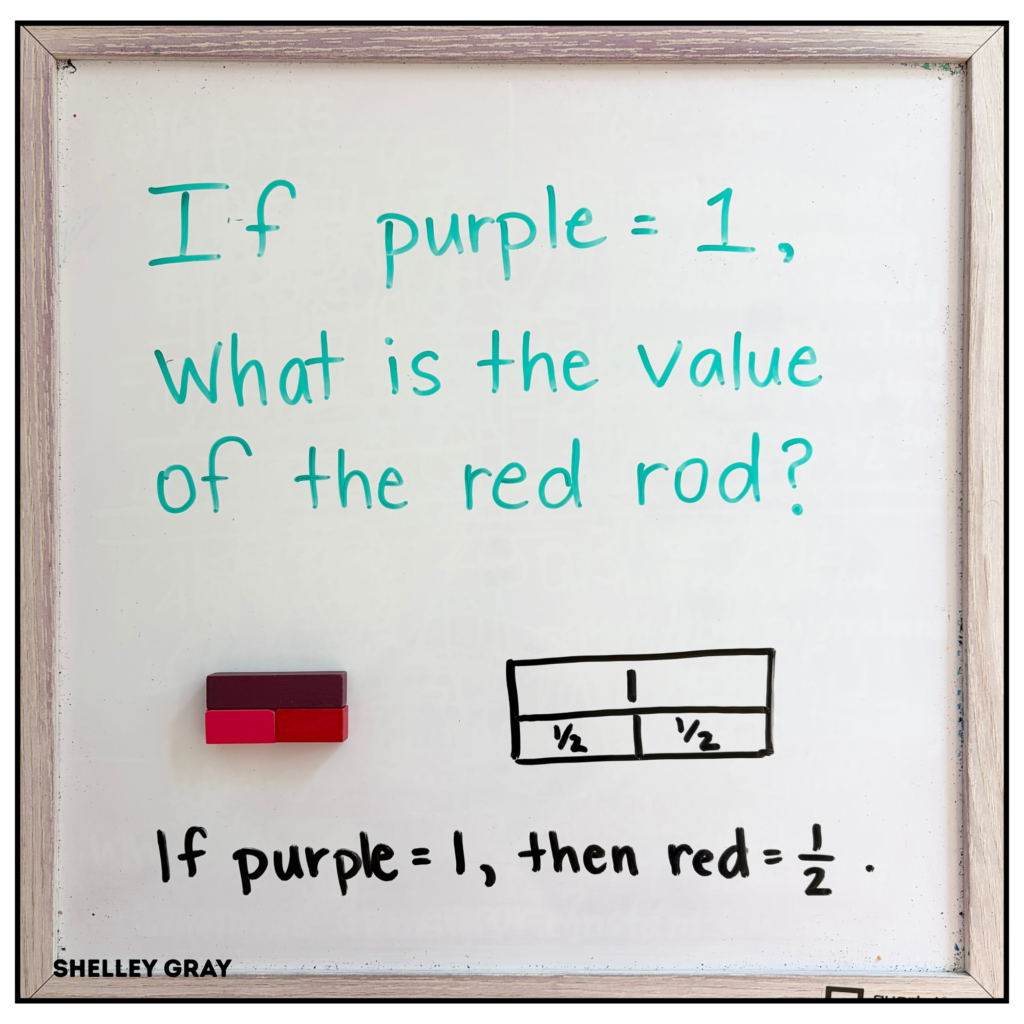
If the purple rod equals 1, what is the value of the red rod? How about the yellow rod? How do you know?
We will touch on this next task in a future section, but I also want to stress the importance of extending some tasks with a follow-up. Now that we’ve completed a task where purple is the whole, we can change the value of purple and see how it changes the value of red.
Try this extension activity.
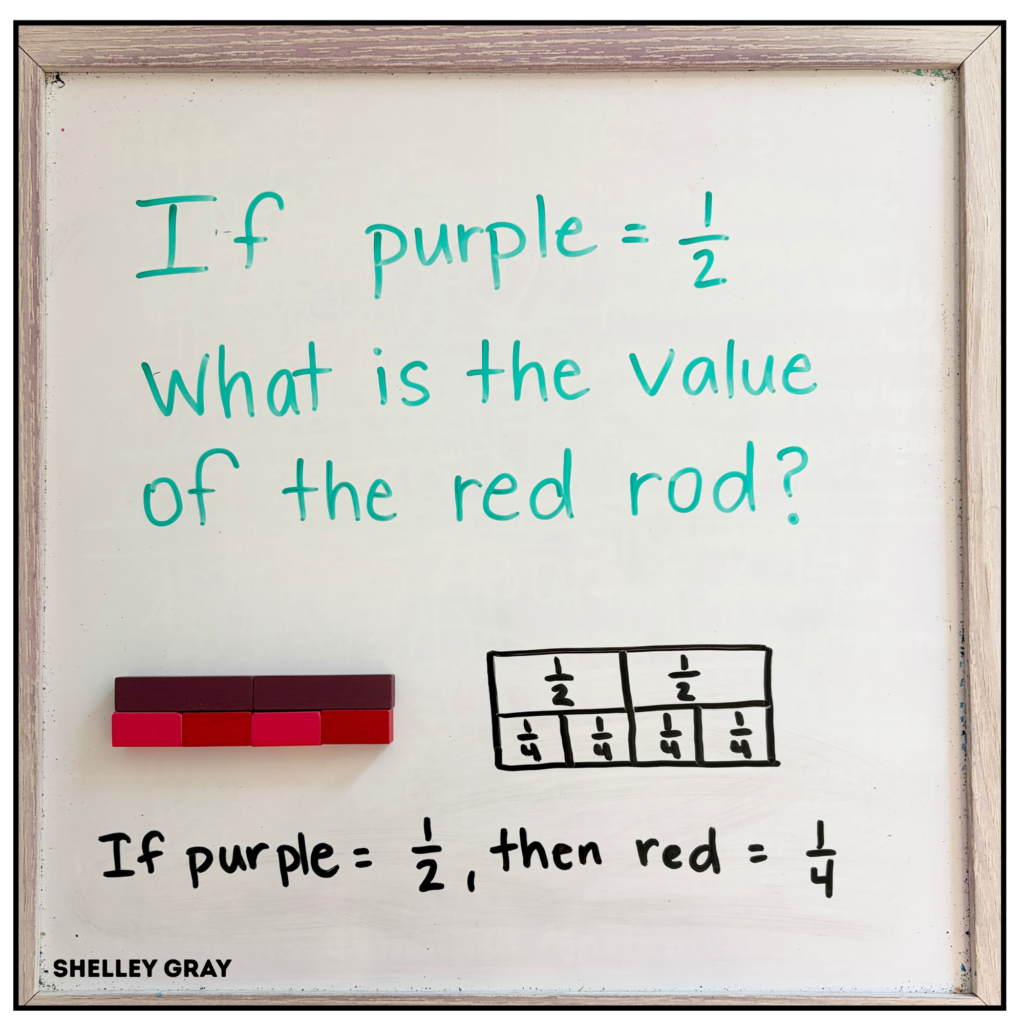
Now let’s change the value of purple! If purple equals one-half, how does that change the value of red?
The flip side of the previous activity is stating the fractional part first and requiring students to logically reason about what the whole must be.
Try this fraction task with your students:
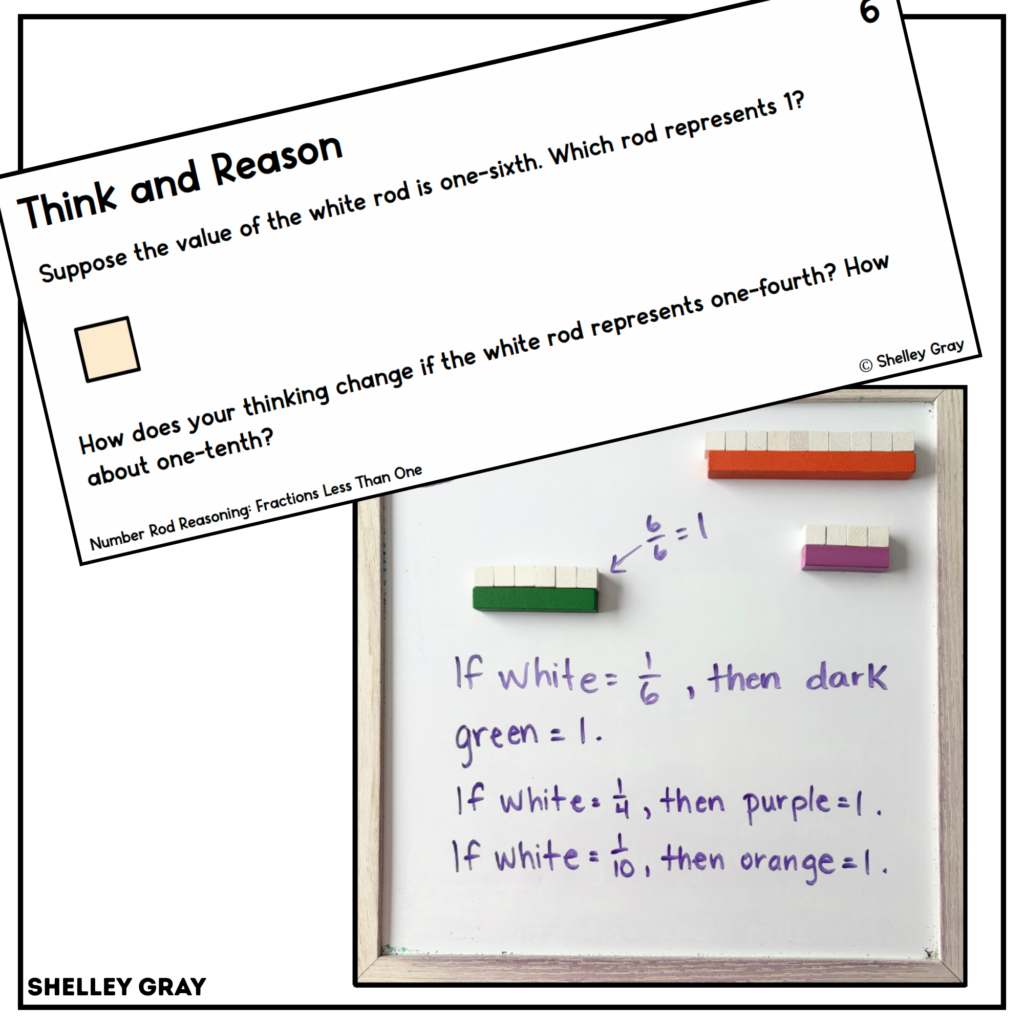
If the white rod is one-sixth, which rod represents one whole?
This task involves a deep understanding of unit fractions and requires students to recognize exactly how many sixths are needed to make a whole.
This task can be found in Number Rod Reasoning for Fractions Less Than One. Click on the image above to see the full package.
State the Fraction and Find Another Fraction
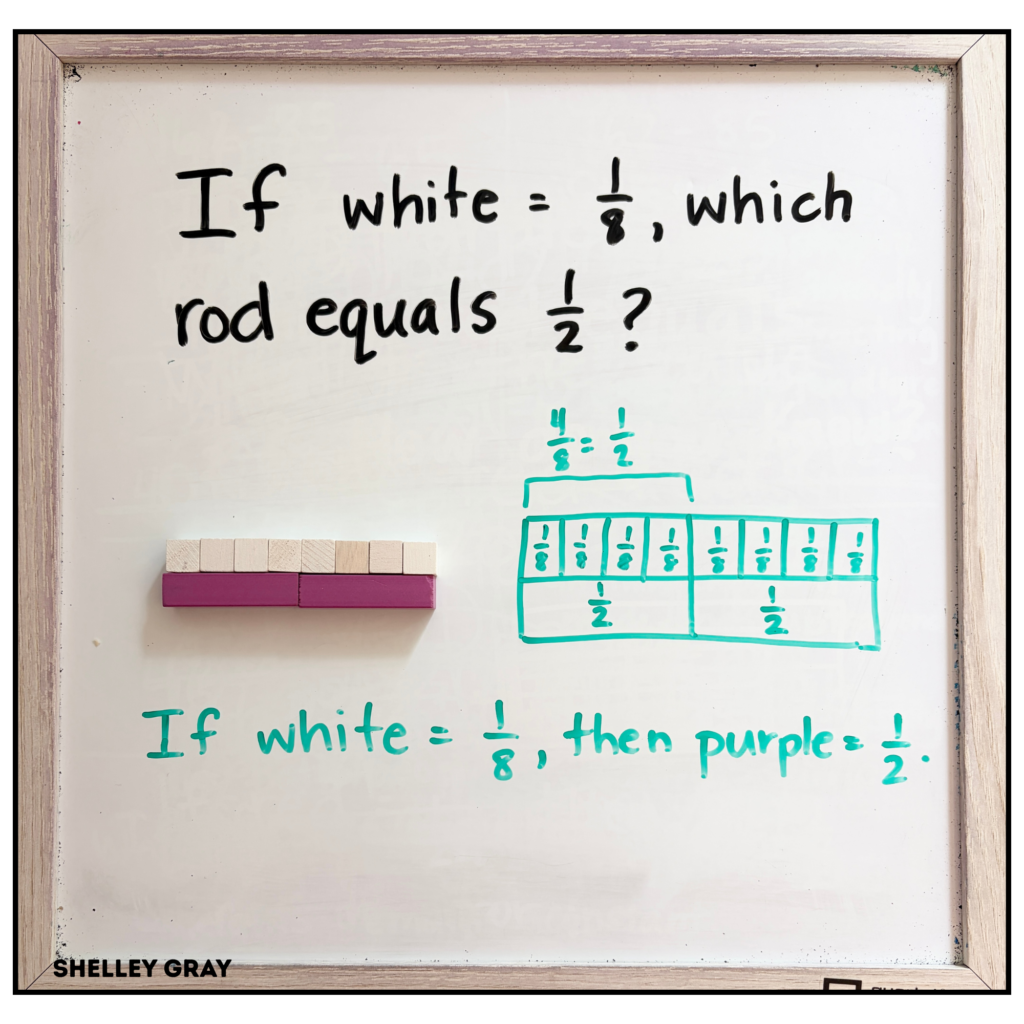
We can also push students’ fractional reasoning skills by giving them a single fraction and asking them to find the rod that matches another fraction.
Try this fraction task with your students:
If white equals one-eigth, which rod equals one-half? How do you know?
Make a Train and State the Total Value
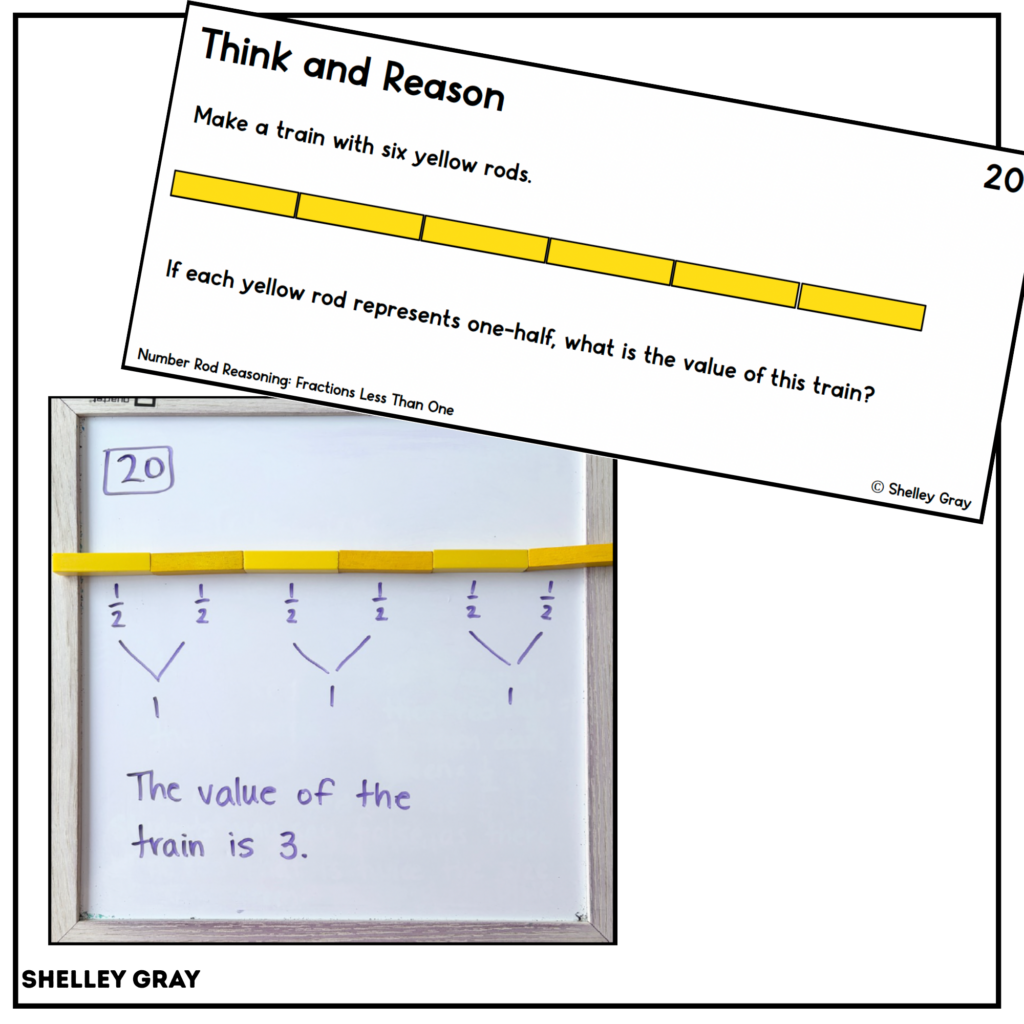
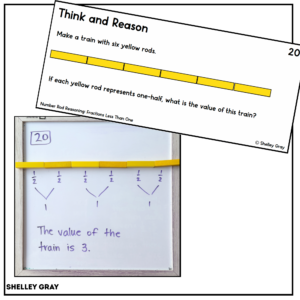
Another great way to have students develop strong fraction sense is to have them build a Cuisenaire rod “train” using same-colored number rods. State the value of one single rod, and have them figure out the value of the entire train.
Try this fraction task with your students:
Build a train with six yellow rods. If each yellow rod represents one-half, what is the total value of the train?
To solve this, students can use additive fraction thinking (1/2 + 1/2 + 1/2…) or multiplicative fraction thinking (6 x 1/2).
This task can be found in Number Rod Reasoning for Fractions Less Than One. Click on the image above to see the full package.
Make a Train and Calculate the Value of One Rod
Finally, you can reverse the previous challenge by giving students the value of the entire train rather than that of a single rod. Using the same yellow rod train from above, you can flip your mathematical questioning.
Try this fraction task with your students:
“Build a train with six yellow rods. If the value of the train is 3, what is the value of one yellow rod?”
Reaching Deeper Fraction Understanding
Cuisenaire rods are far more than simple blocks; they are a powerful tool for shifting your teaching from meaningless memorization to true conceptual thinking.
By playing with the whole and changing the value of the rods, you invite your students to analyze relationships, think critically, and build a strong foundation of fraction sense.
Try introducing just one of these sample tasks during your next small group instruction, and listen closely to the incredible mathematical reasoning your students display!
Toward Conceptual Fraction Understanding
All the tasks above require only Cuisenaire rods and your imagination! However, if you’d like some additional low-prep support with task brainstorming, I’d love to help!
If you love using hands-on math tools to spark incredible math talk and incorporate concrete experiences into your teaching, you’ll love this Number Rod Bundle. Reinforce addition, subtraction, multiplication, division, and fractions in an engaging, hands-on way!