Fractions are notoriously difficult for kids to grasp. Unless students have had a lot of prior experience with baking, building, or other skills that utilize fractions, they can seem very abstract. Fractions of a set can be even more confusing. For example, many students will say that 1/4 of 12 is 4 (because they see 4 as the denominator), when in reality it is 3. So how do we teach fractions of a set in a way that helps build understanding rather than rote memorization? The answer is with bar models.
What is a Bar Model?
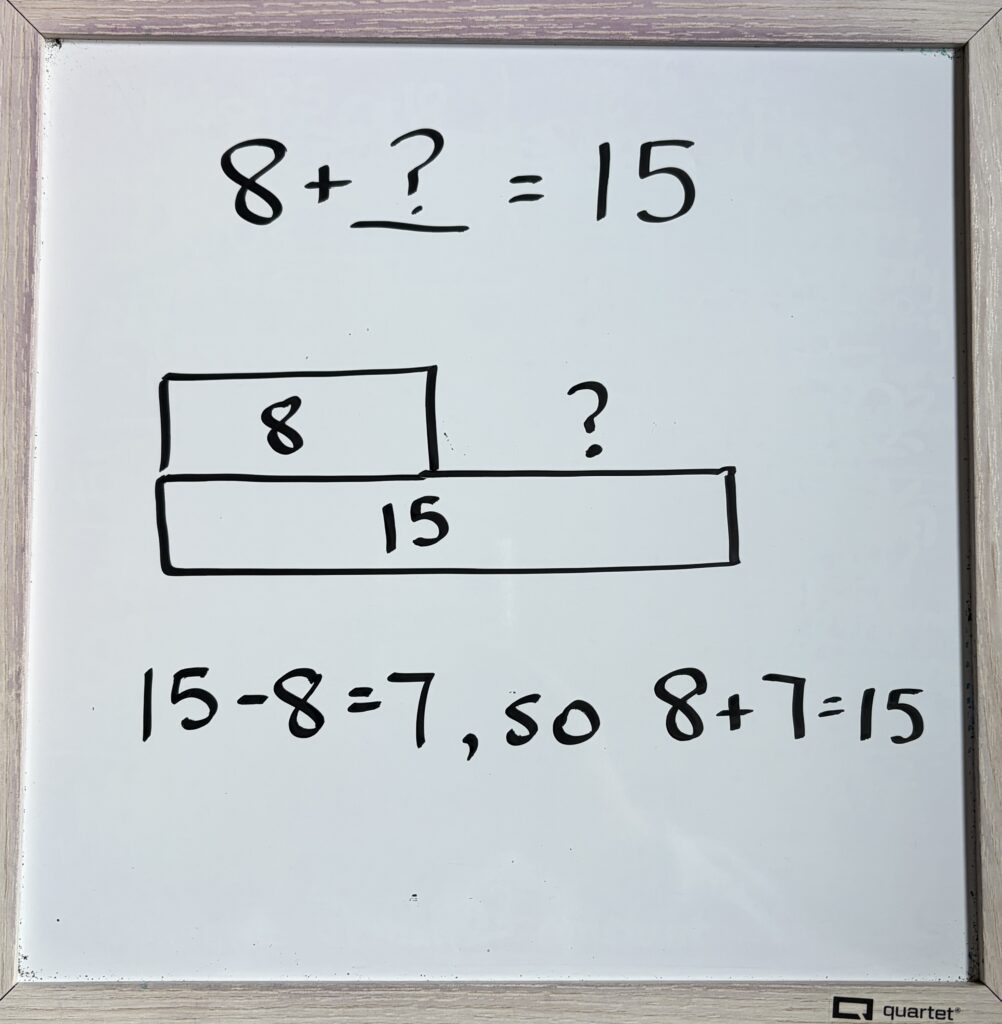
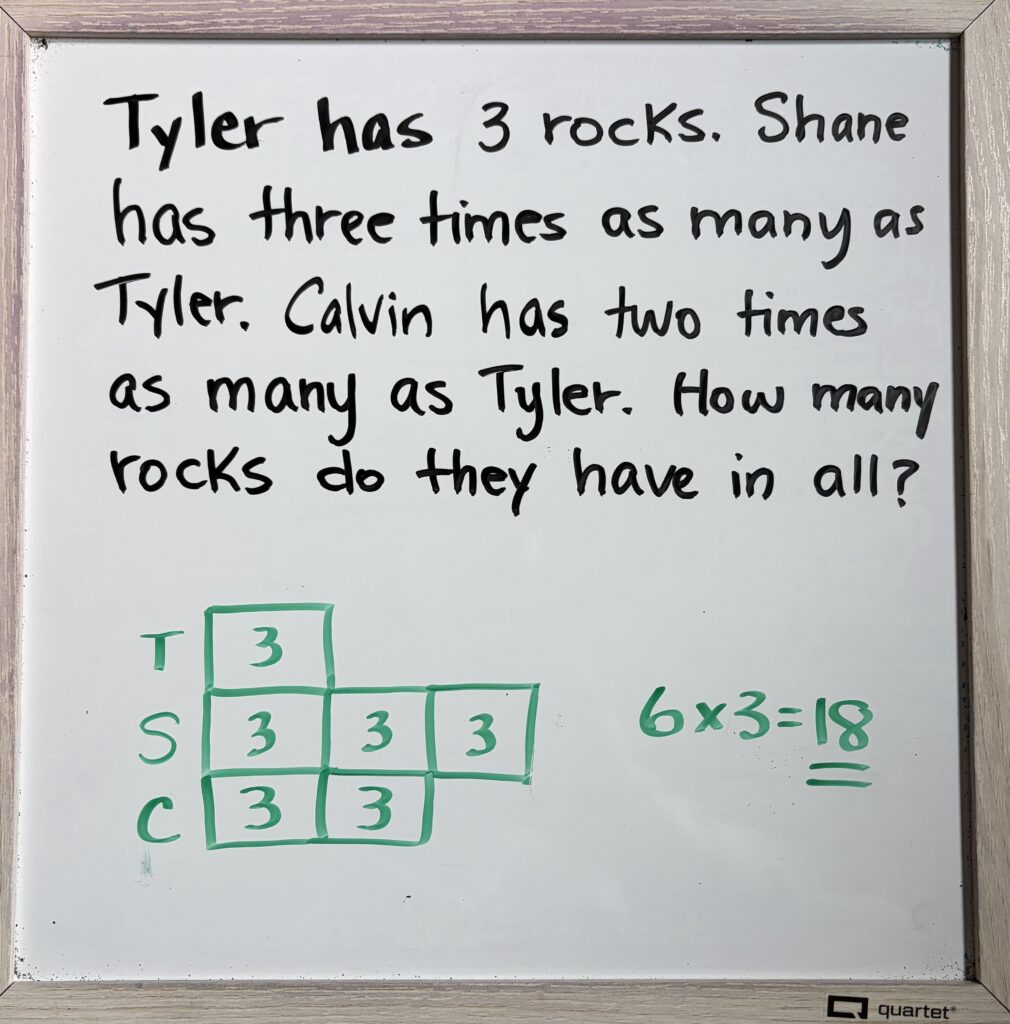
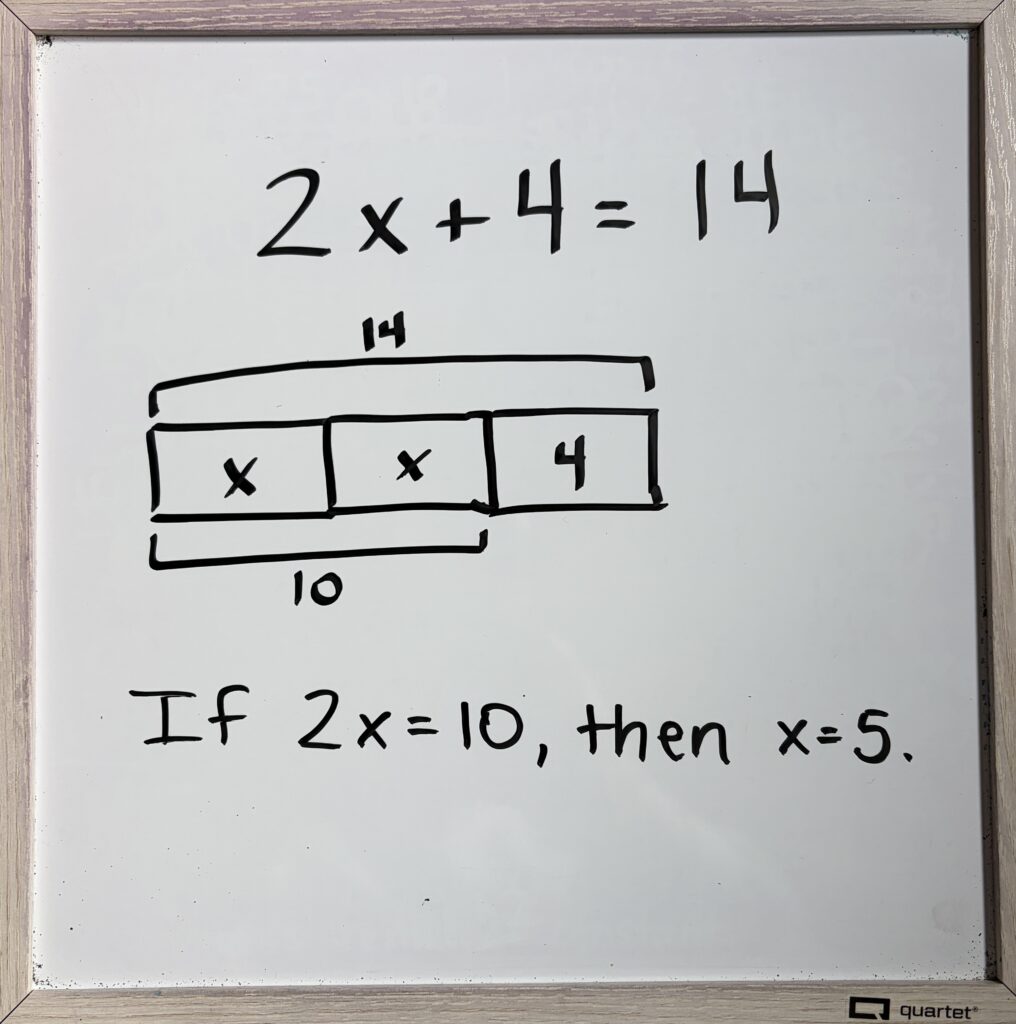
Used as a core math model for problem-solving in Singapore, the bar model is an effective way to visualize relationships between numbers. Bar models can be used for everything from simple addition/subtraction equations to problem-solving to solving algebraic expressions.
Look at how the concepts below can be made more visual with a bar model.
Fractions of a Set: Before Bar Models
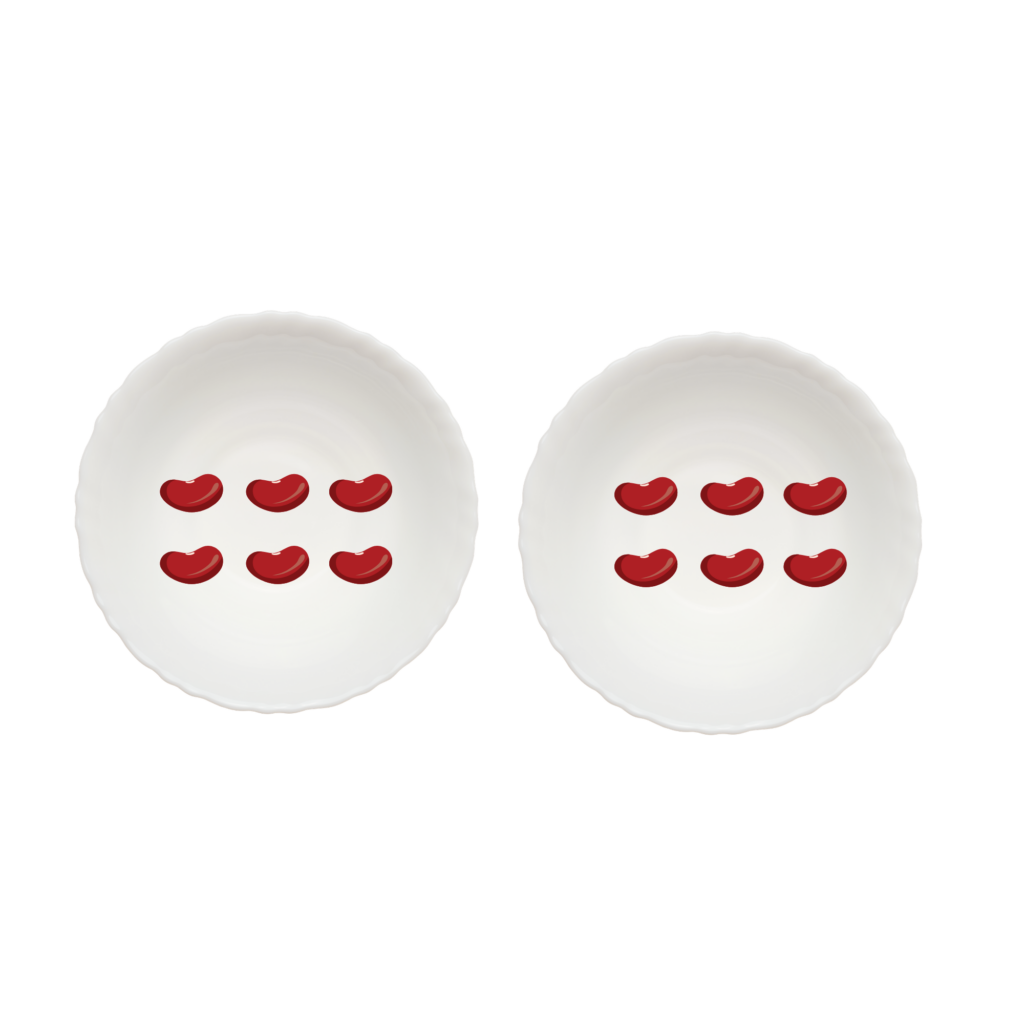
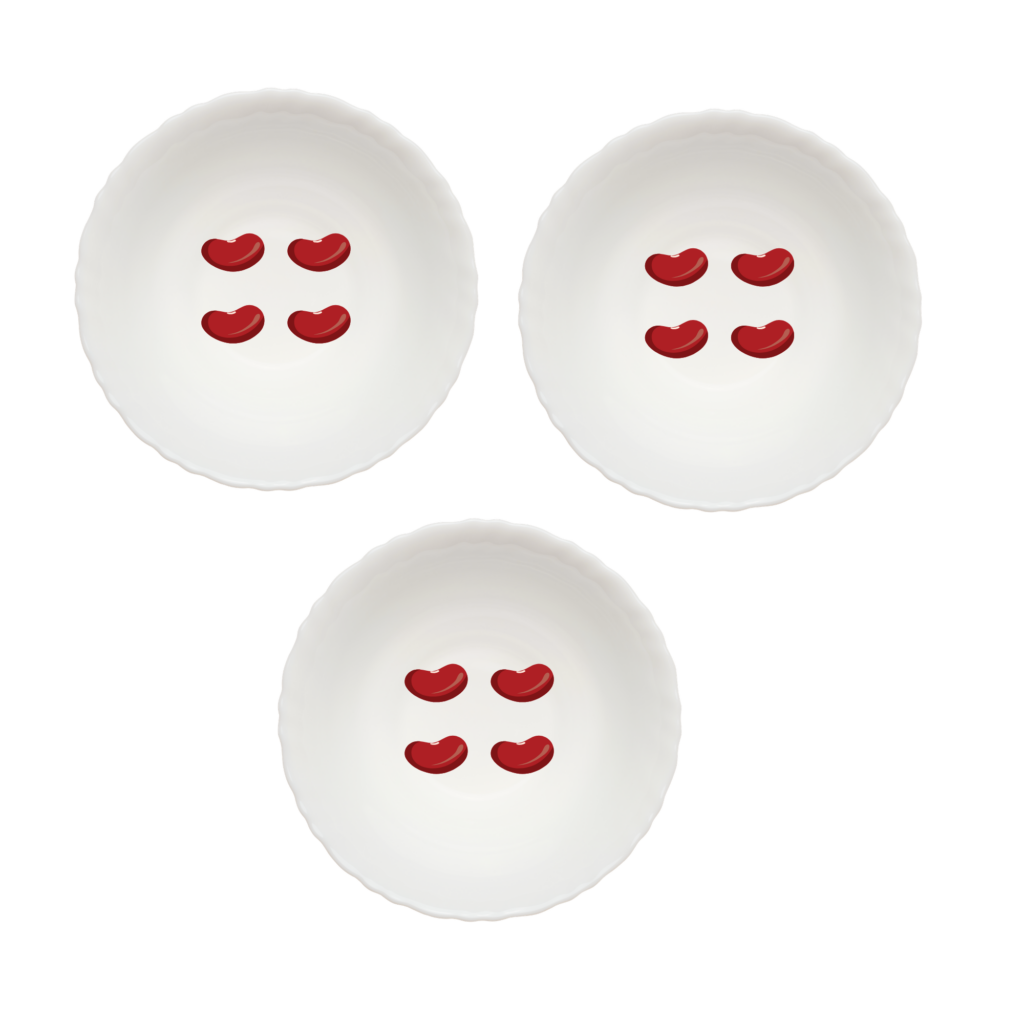
Before teaching bar models as a way to visualize fractions of a set, we can make the concept even more concrete with physical materials. For example, small cups and beans can be used to divide quantities into halves, thirds, or fourths. Then we can help students link this concrete experience to a more abstract bar model. Here are some sample tasks for your students.
HALVES
Give students 12 beans. Say, “We are going to divide our beans into halves. We will put each half in a cup. How many cups do I need?” Students should recognize that they will need two cups.
Now watch as students divide their beans in half. Some may alternate one bean in this cup, one bean in that cup, one bean in this cup, one bean in that cup until they are out of beans. Other students might recognize that each cup will need 6 beans.
Along with the students come to the conclusion that half of 12 is 6.
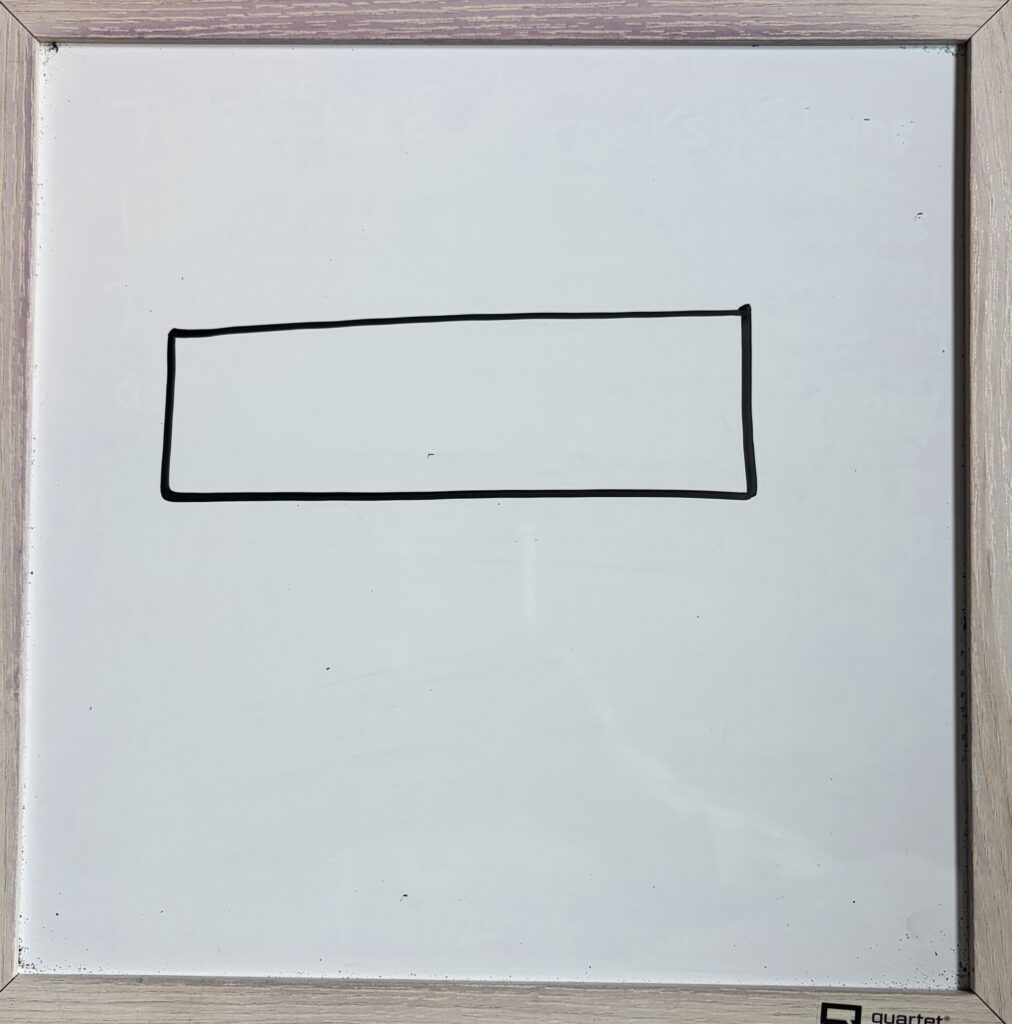
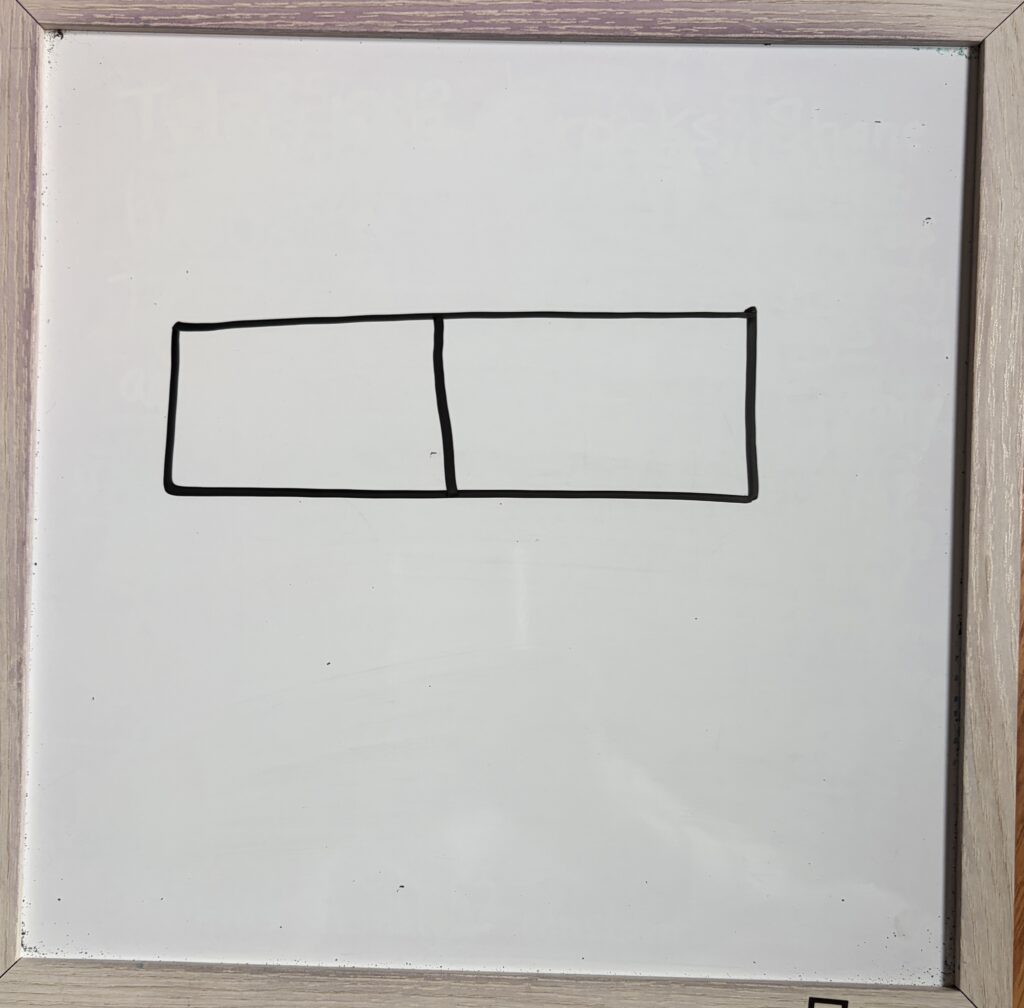
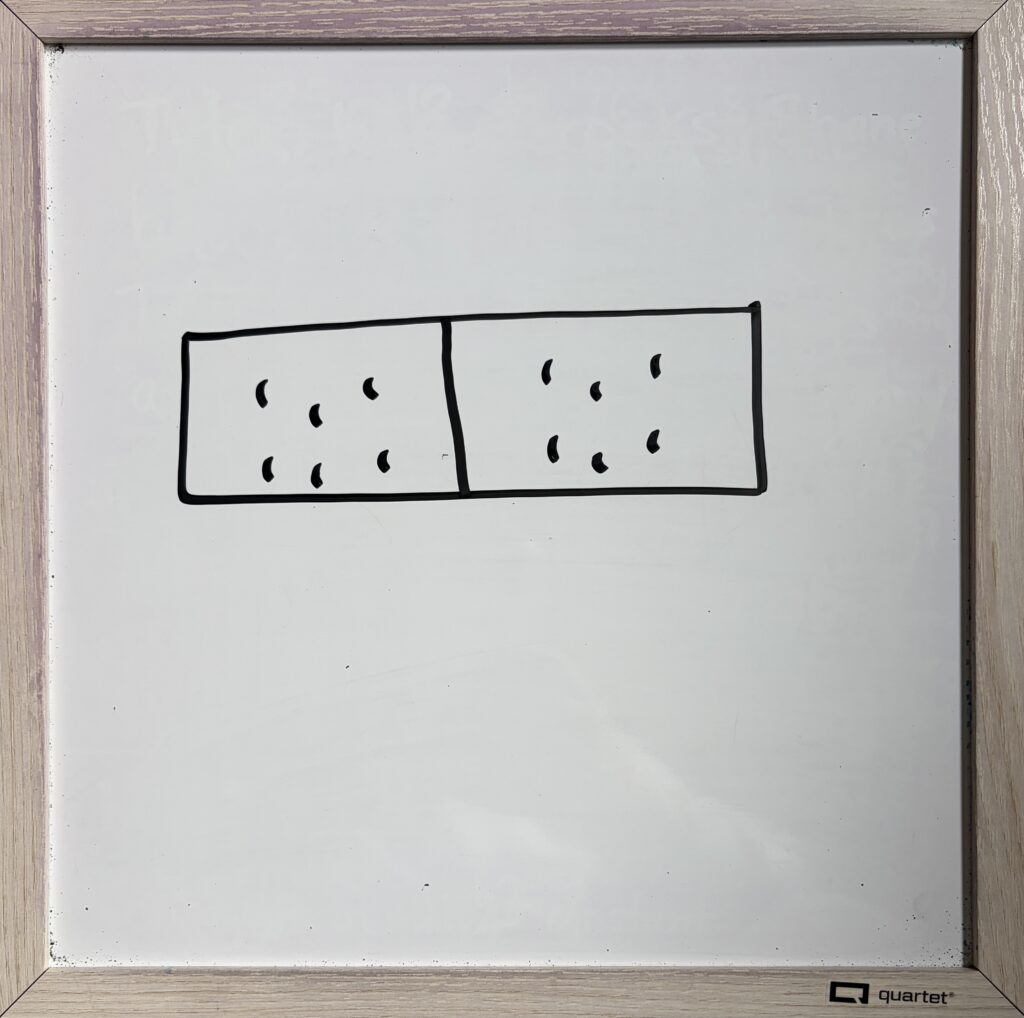
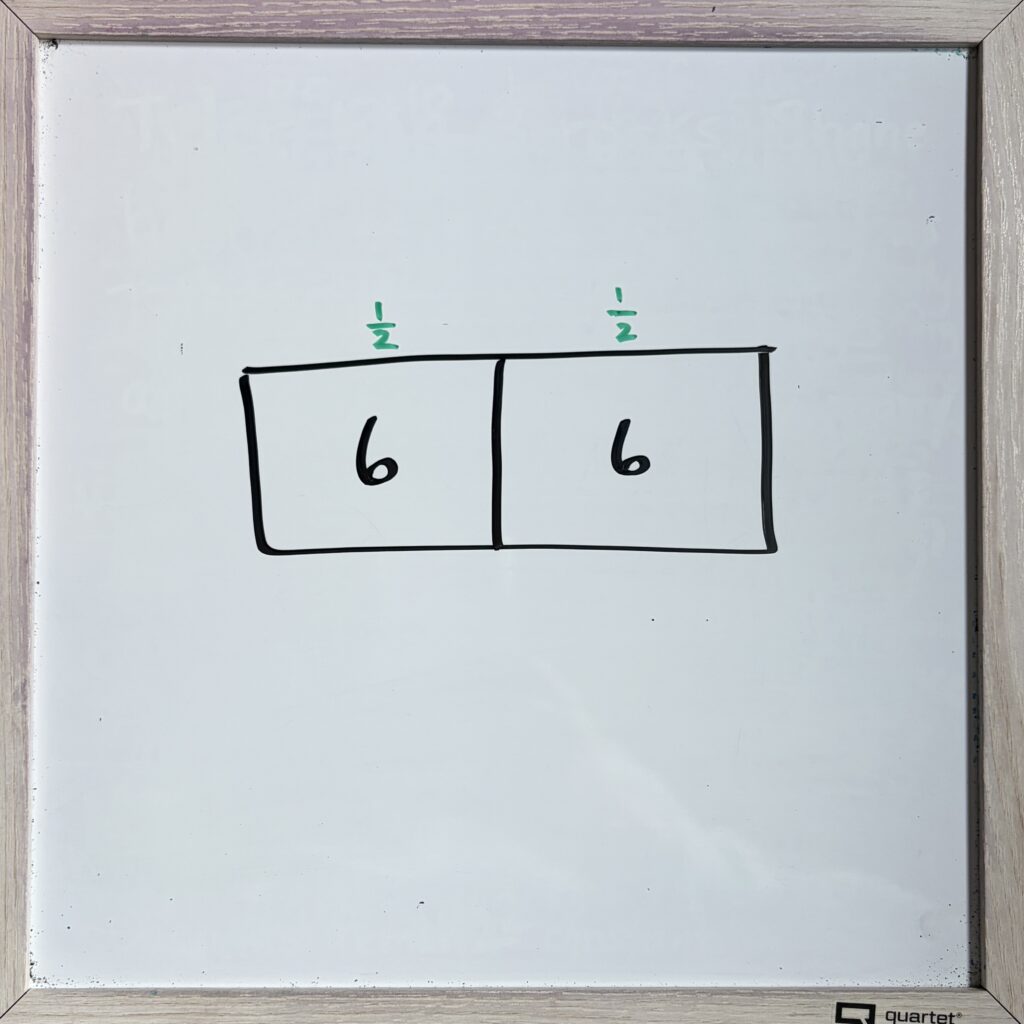
Now we can connect this to a bar model drawing. Let’s begin by drawing a bar. Since we are working with halves, we will divide the bar into two equal parts. Then let’s draw our beans. We will show that there are 6 in each half.
Once students have built this conceptual understanding, our bar model might simply look like this:
THIRDS
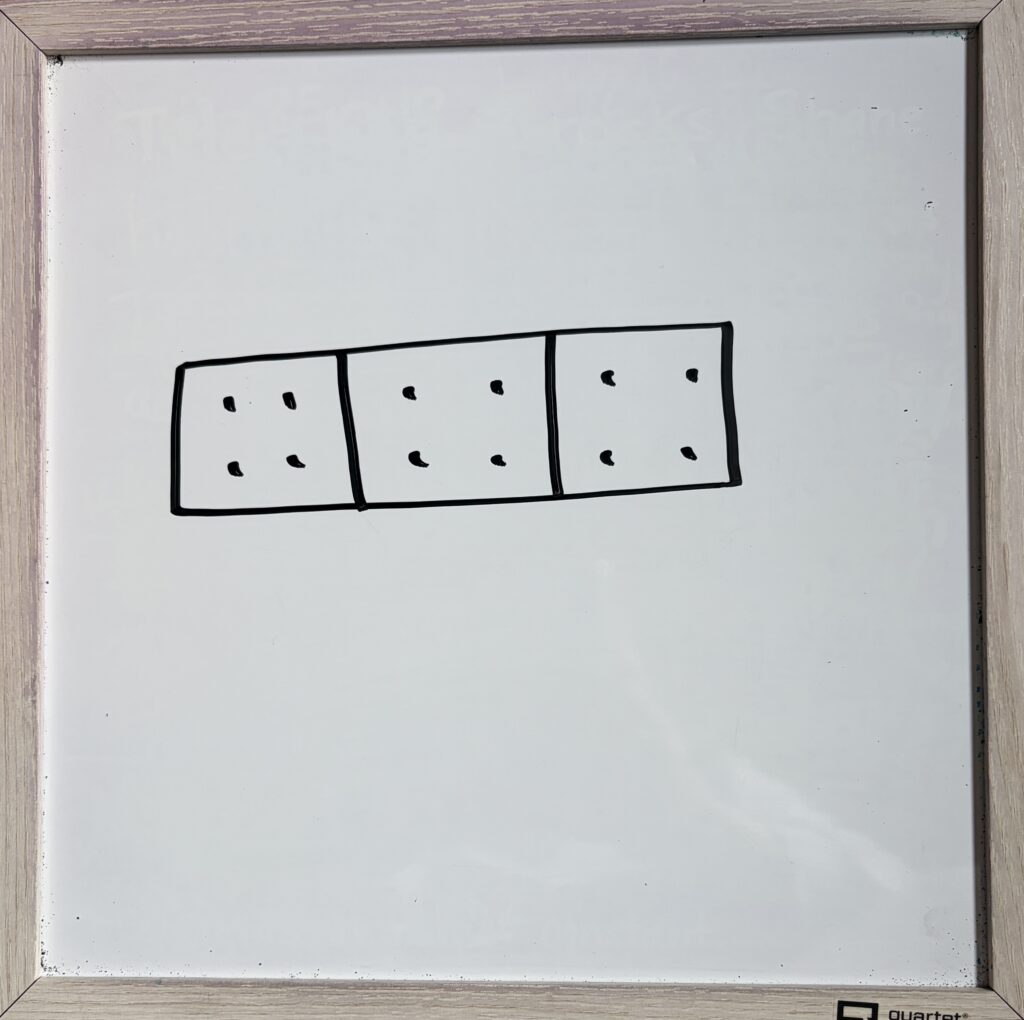
What if we want to divide our 12 beans into thirds? How many cups do I need now? Three! Each cup will hold one-third of our beans.
Once we divide our 12 beans into thirds, we can draw a bar model that might look something like this. This helps students bridge from concrete to pictorial.
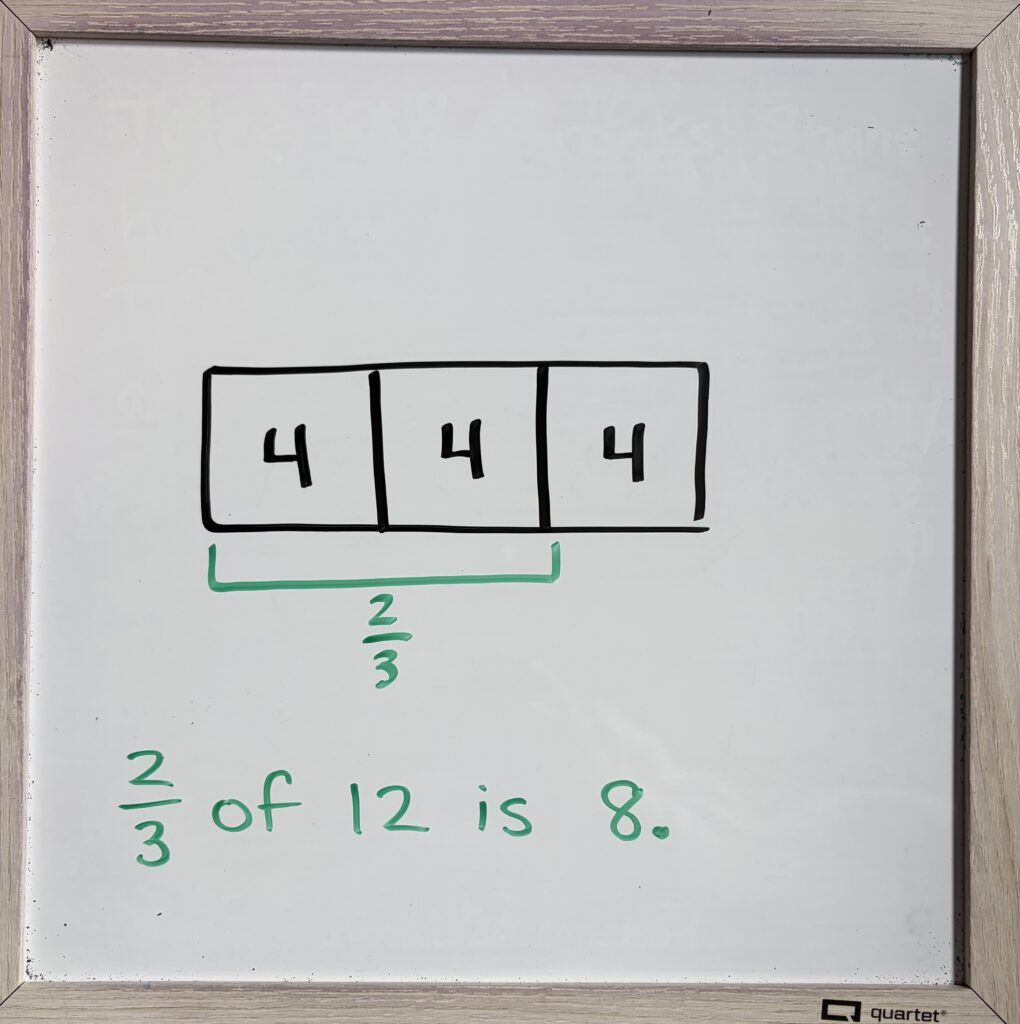
A bar model with numbers only is the natural next step. Modelling our thinking makes it easier to answer questions like, “What is two-thirds of 12?” We can visualize it as shown below.
Using Bar Models for Problem-Solving With Fractions of a Set
Once students have had lots of hands-on practice and built their understanding, bar models can become an effective tool for solving problems involving fractions of a set.
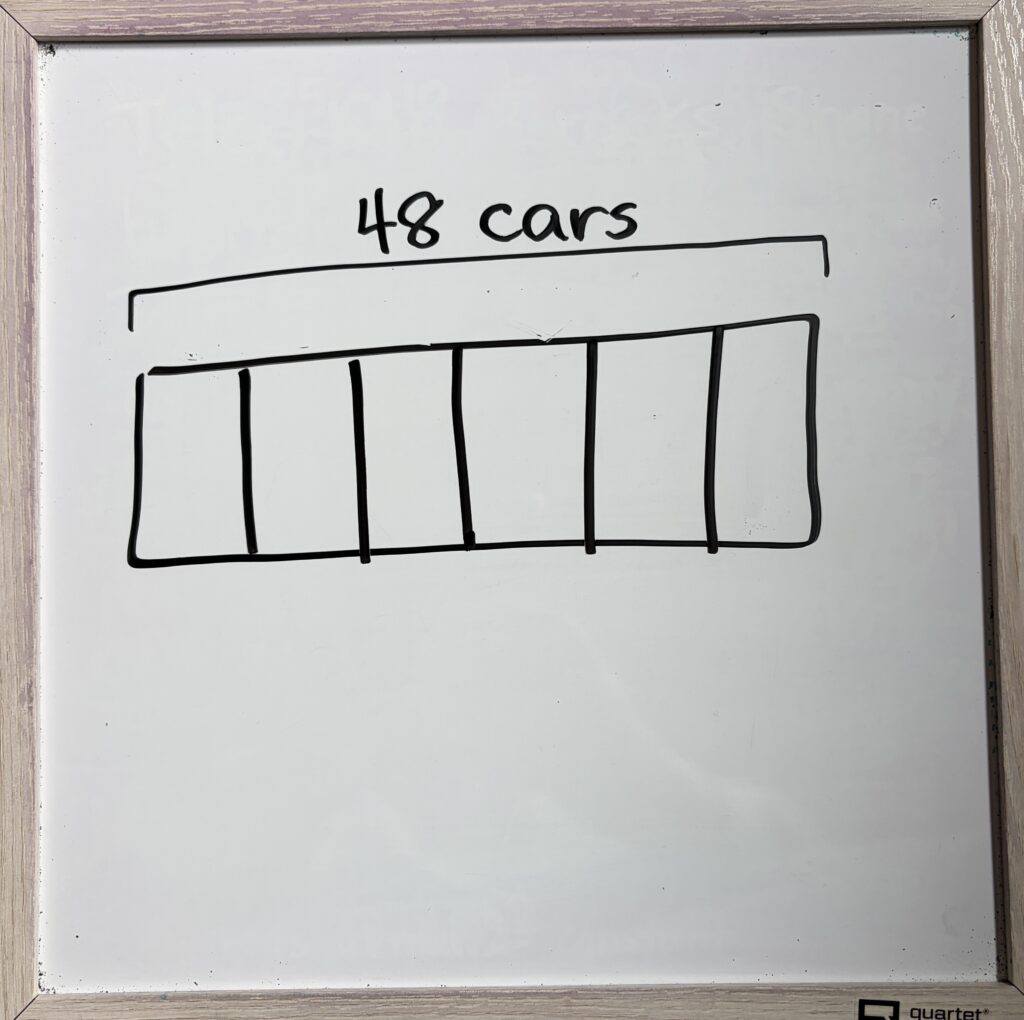
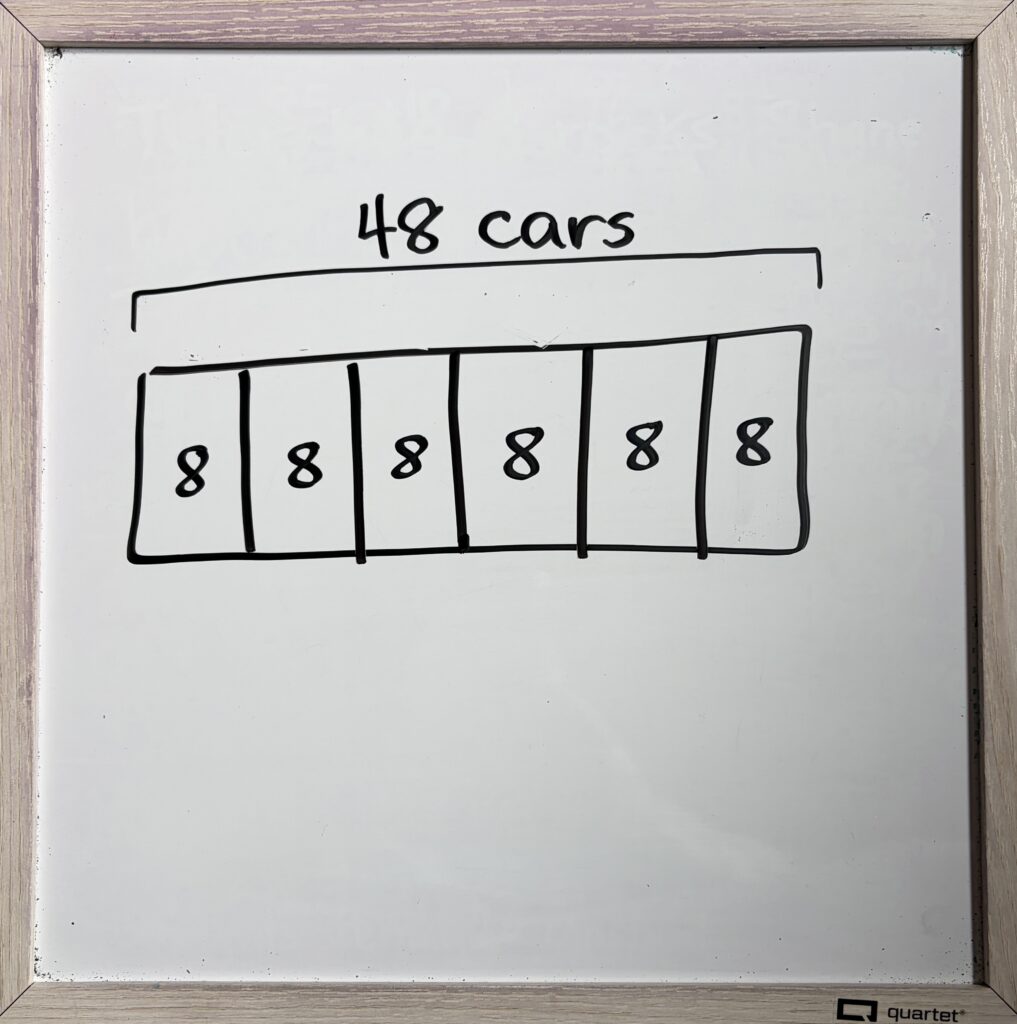
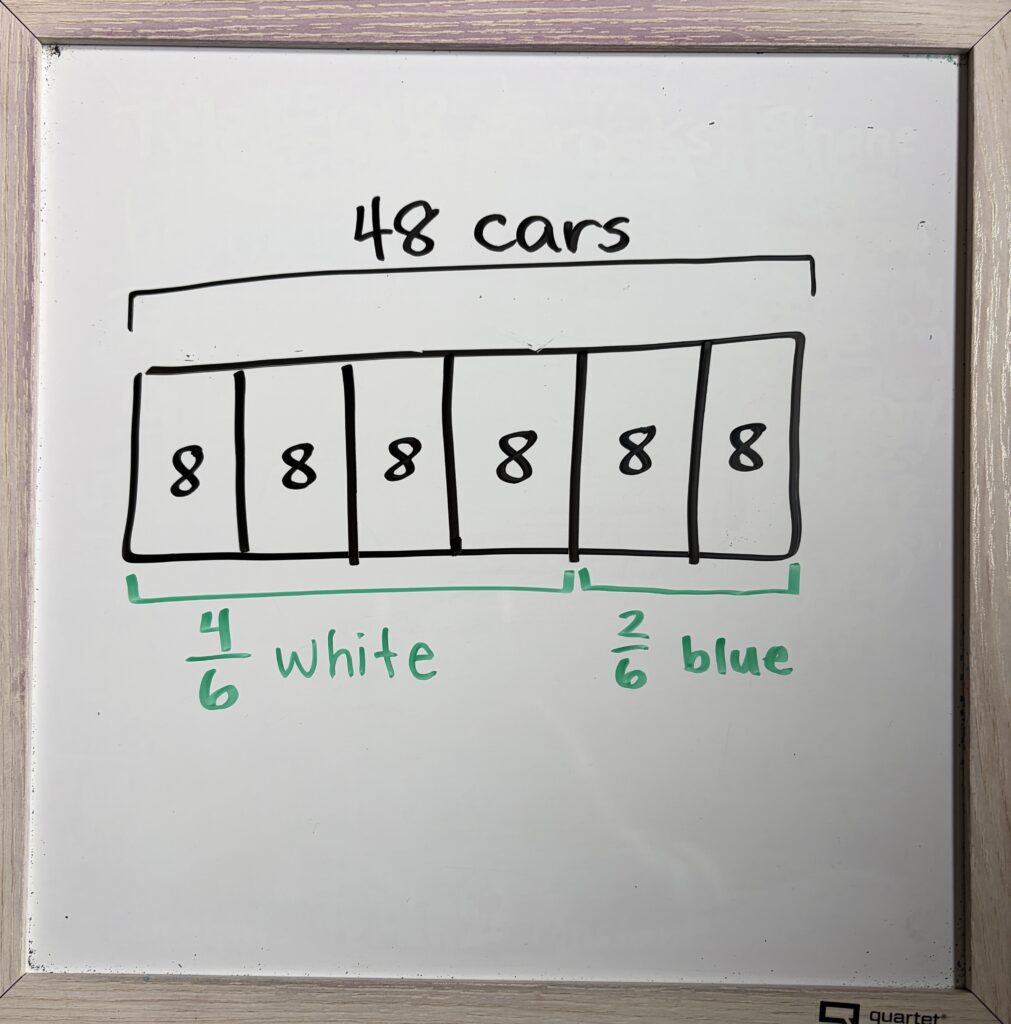
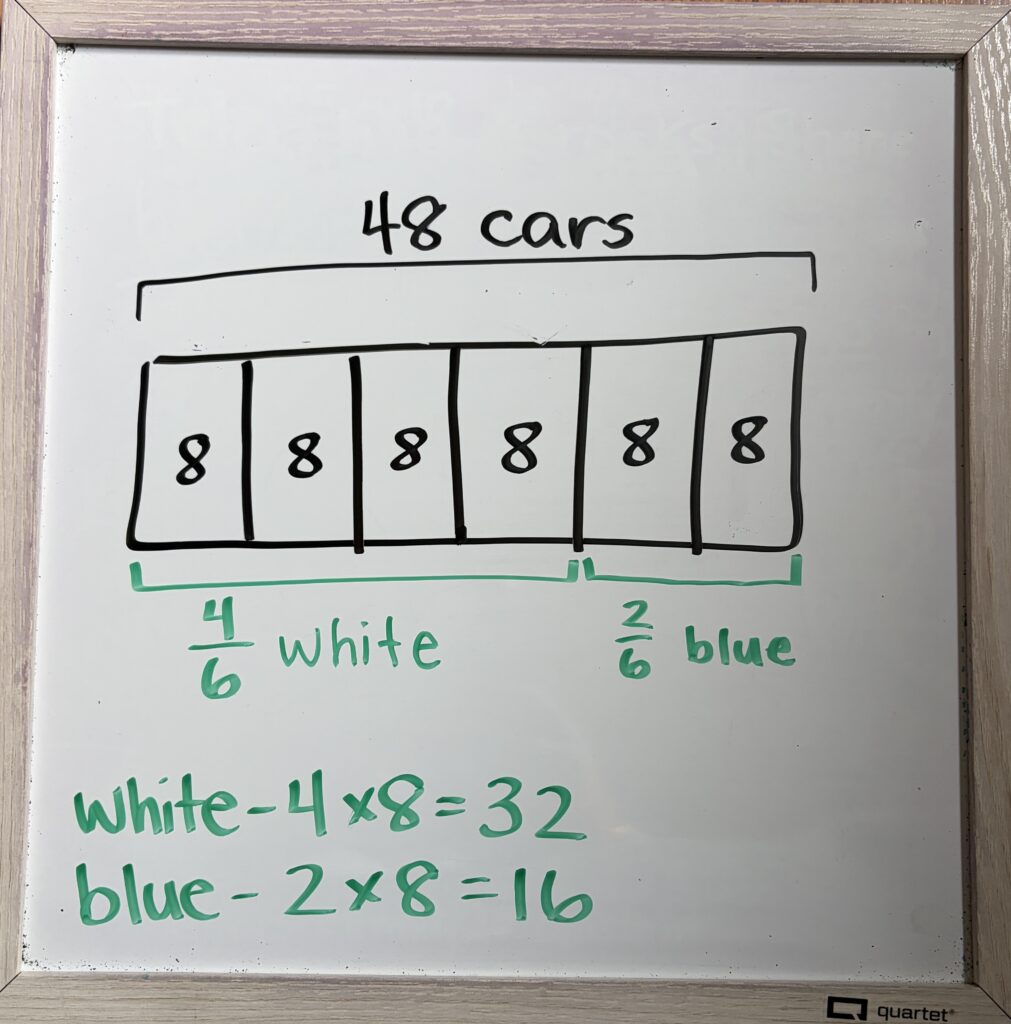
Consider this problem: There are 48 cars in all. Four-sixths of them are white, and the rest are blue. How many blue cars are there?
We can solve this problem simply using a bar model. First of all, since we are working with sixths, we will draw our bar model with six equal parts. This bar represents all of our cars, which we know is 48.
We know that each part has to have the same amount. 48 divided into 6 equal parts is 8, so we can mark 8 in each sixth. Now we can use our model to visualize the white and blue cars. This makes it simple to see that we have 32 white cars and 16 blue cars.
Changing the Questioning
Fraction of a set problems can also be designed so that the total number of items is the unknown. Here’s an example:
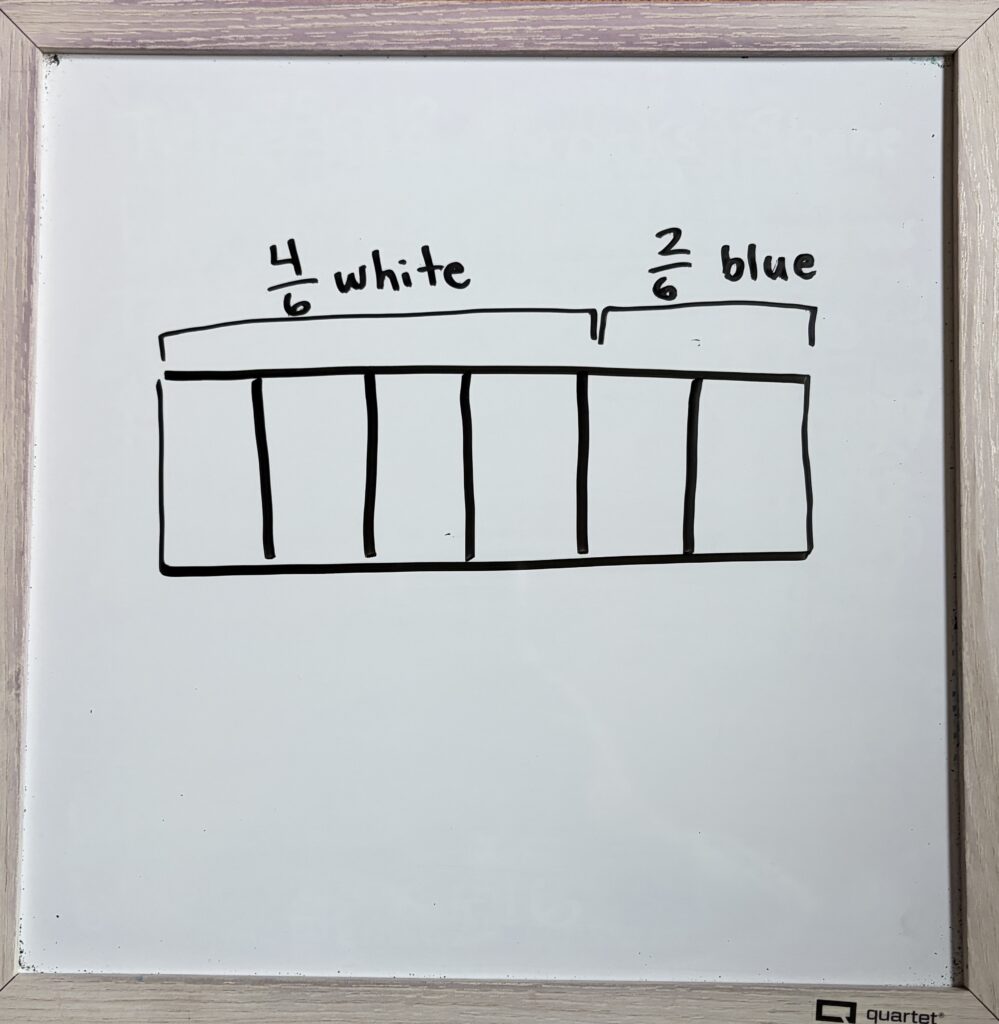
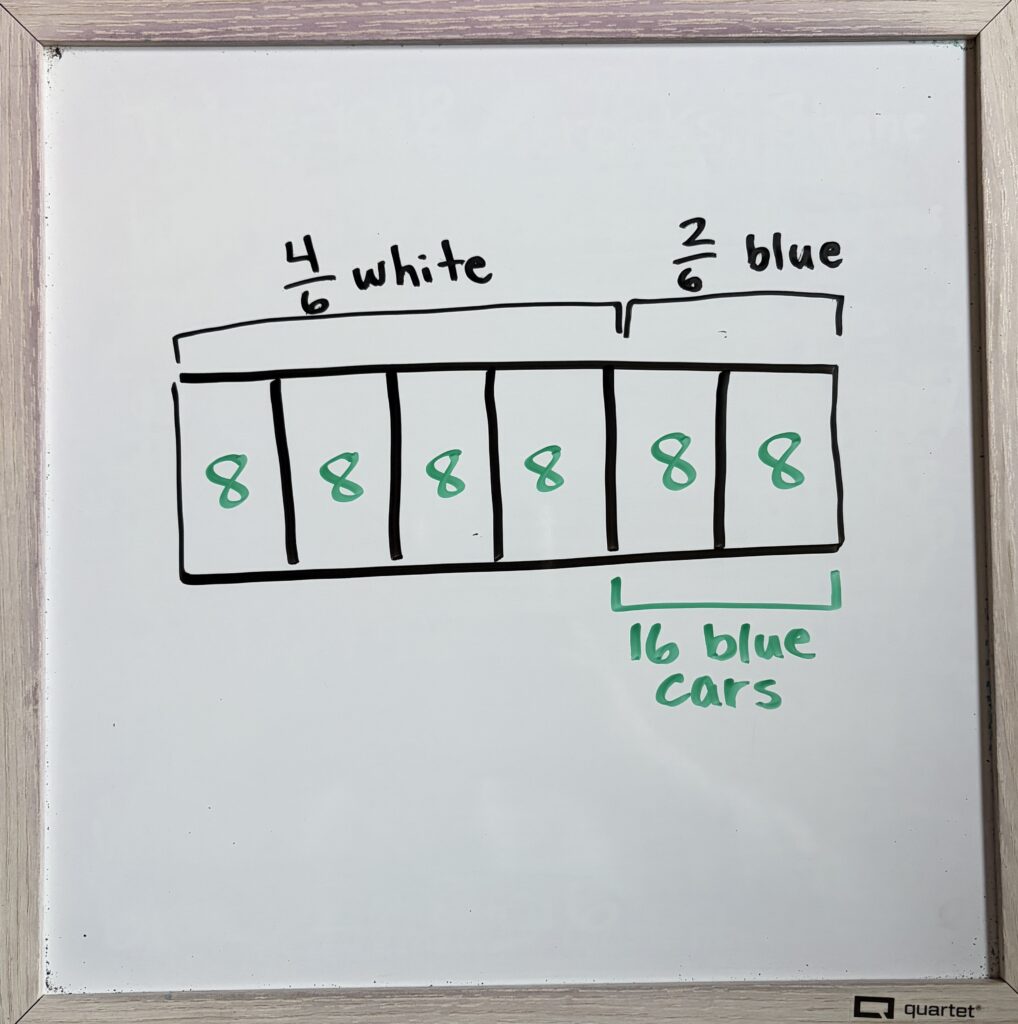
There are some cars in the parking lot. Four-sixths of them are white, and the rest are blue. There are 16 blue cars. How many cars are there in all?
For this problem, we can still use a bar model, but we will take a slightly different approach.
First, we will divide our bar into sixths, just like we did last time. We can label the white cars and blue cars. Now, because we know there are 16 blue cars, this tells us that each sixth has to have 8 cars.
We can then fill in the rest of our sixths with an 8 in each. Now there are multiple ways to figure out the total number of cars. I can see that there are six 8s, so I’ll do 6×8 to make 48 cars in all.
This problem could have been confusing, but the bar model made it easy to visualize.
Try This One!
Ok, let’s practice! Try this fraction-of-a-set problem on your own, and then scroll down to see if your bar model looks like mine!
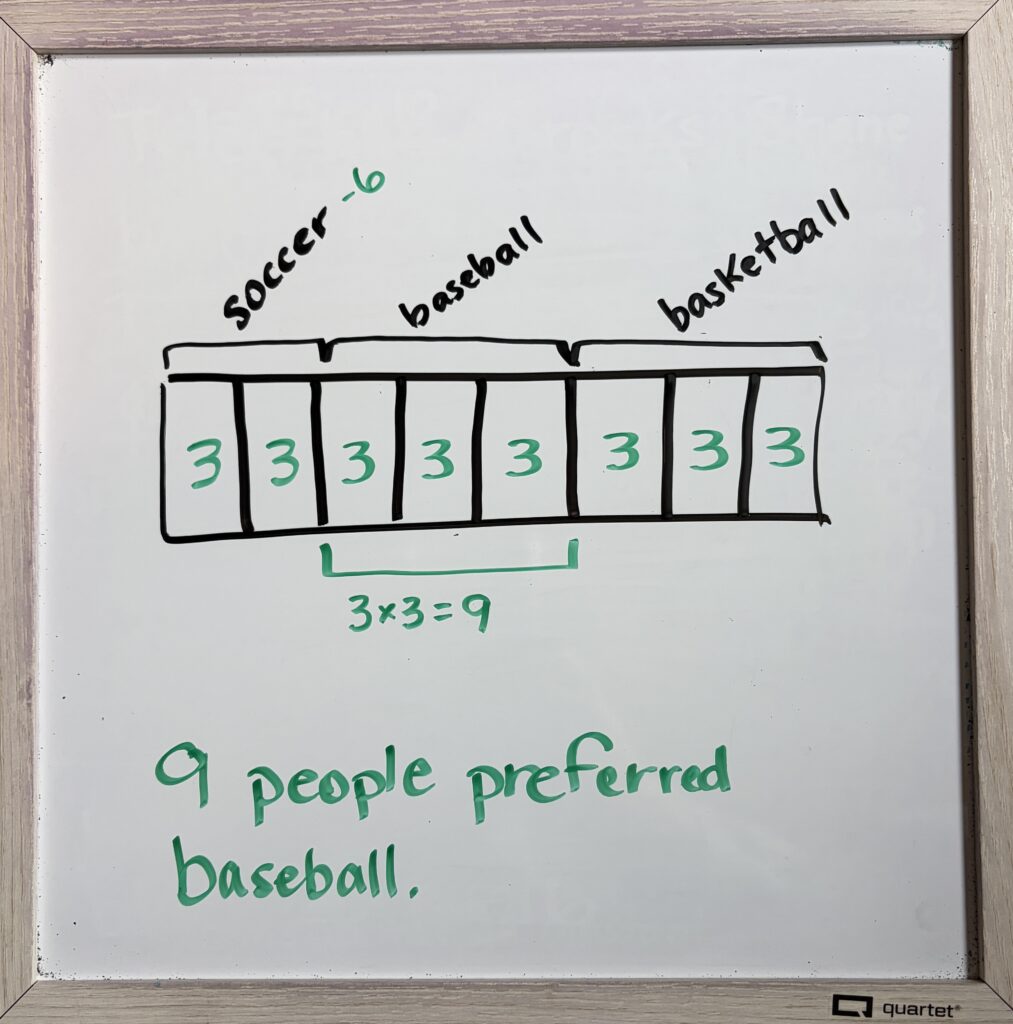
Mary surveyed the kids in her class to find out their favorite sports. Two-eighths of the class liked soccer best. The rest of the class was evenly split between baseball and basketball. If 6 kids preferred soccer, how many kids preferred baseball?
Try a bar model! I’ll wait…..
Here’s how I solved it. Does your bar model look similar?
Practicing Fractions of a Set With Double-Sided Counters
If you have double-sided counters in your classroom, they are a great way to make fractions of a set hands-on. Some small group task ideas include:
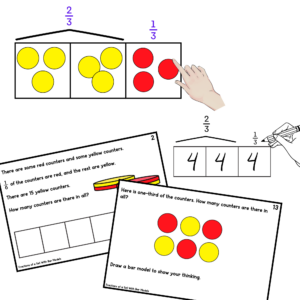
Take 15 (or any other number) chips. Show what it would look like if two-fifths (or another fraction) of them were red.
Use the chips to solve a fraction of a set word problem.
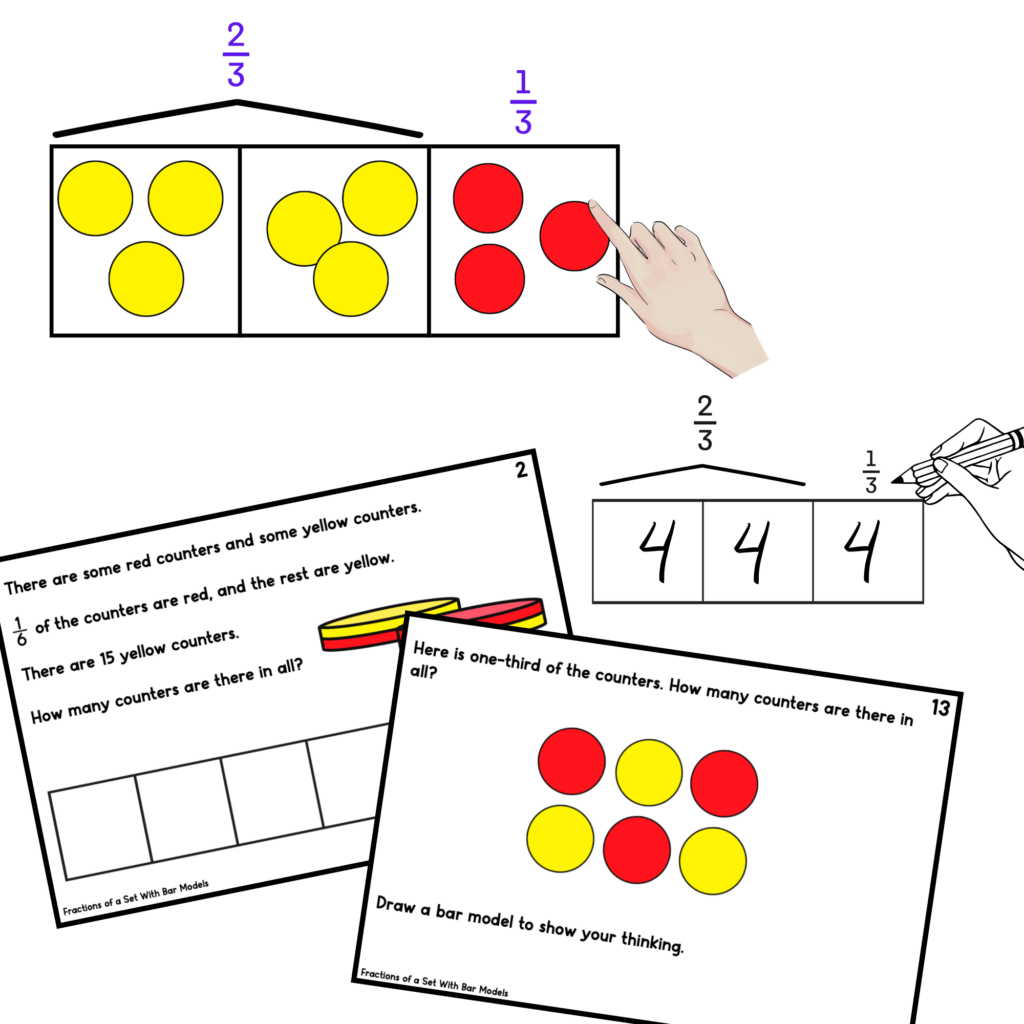
If you’d like more guidance and structure with activities to practice fractions of a set, here is a set of task cards you might find helpful.
This resource incorporates Concrete, Representational, and Abstract (CRA) learning, giving your students the opportunity to see mathematical connections and develop a deep, lasting understanding of the concept. By using bar models as a visual bridge, students transition smoothly from manipulating physical objects (such as red/white counters or integer chips) to solving abstract fraction word problems with confidence.